
Denteler Cutlery Range
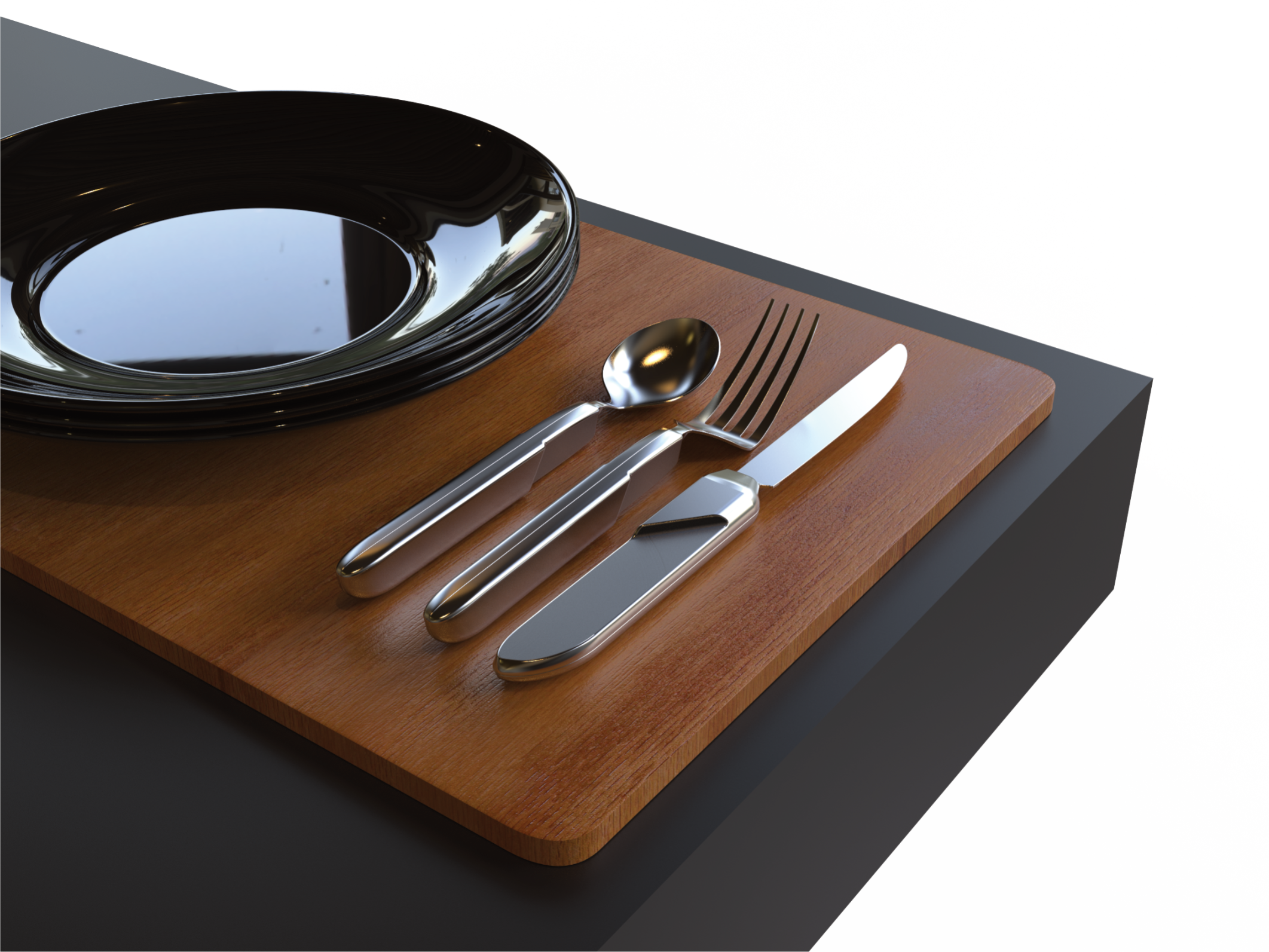
For this range of cutlery we have developed an innovative way of using indents on the standard cutlery form to perform a new contemporary set. The set aids users who struggle with hand dexterity as well as performing well for all customers.
The brief & Empathy study
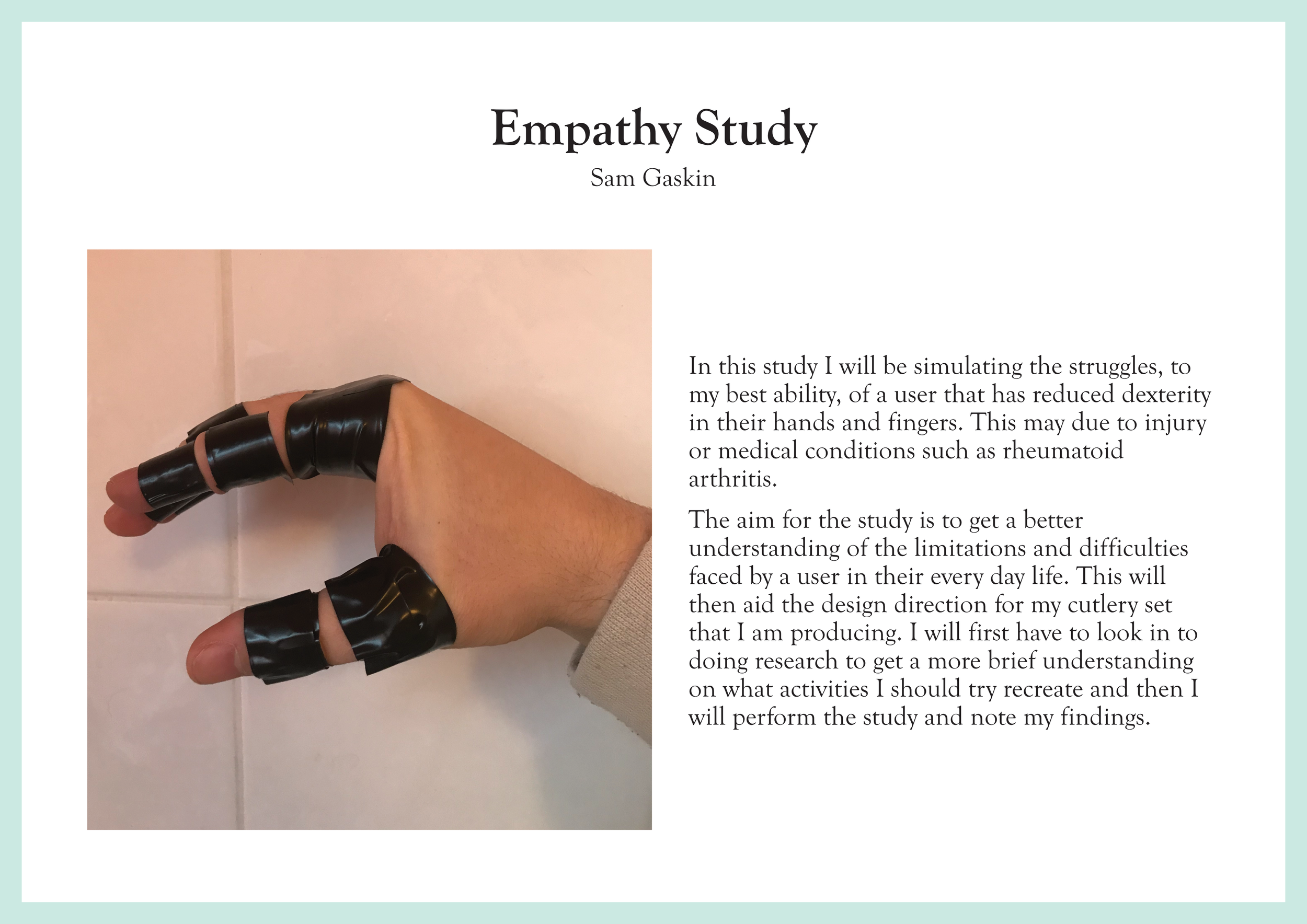
This project was heavily reliant on the human factors aspect of design as we were tasked to produce a set of cutlery for users with reduced dexterity in their hands/fingers, whether that be from injury or medical conditions such as rheumatoid arthritis.
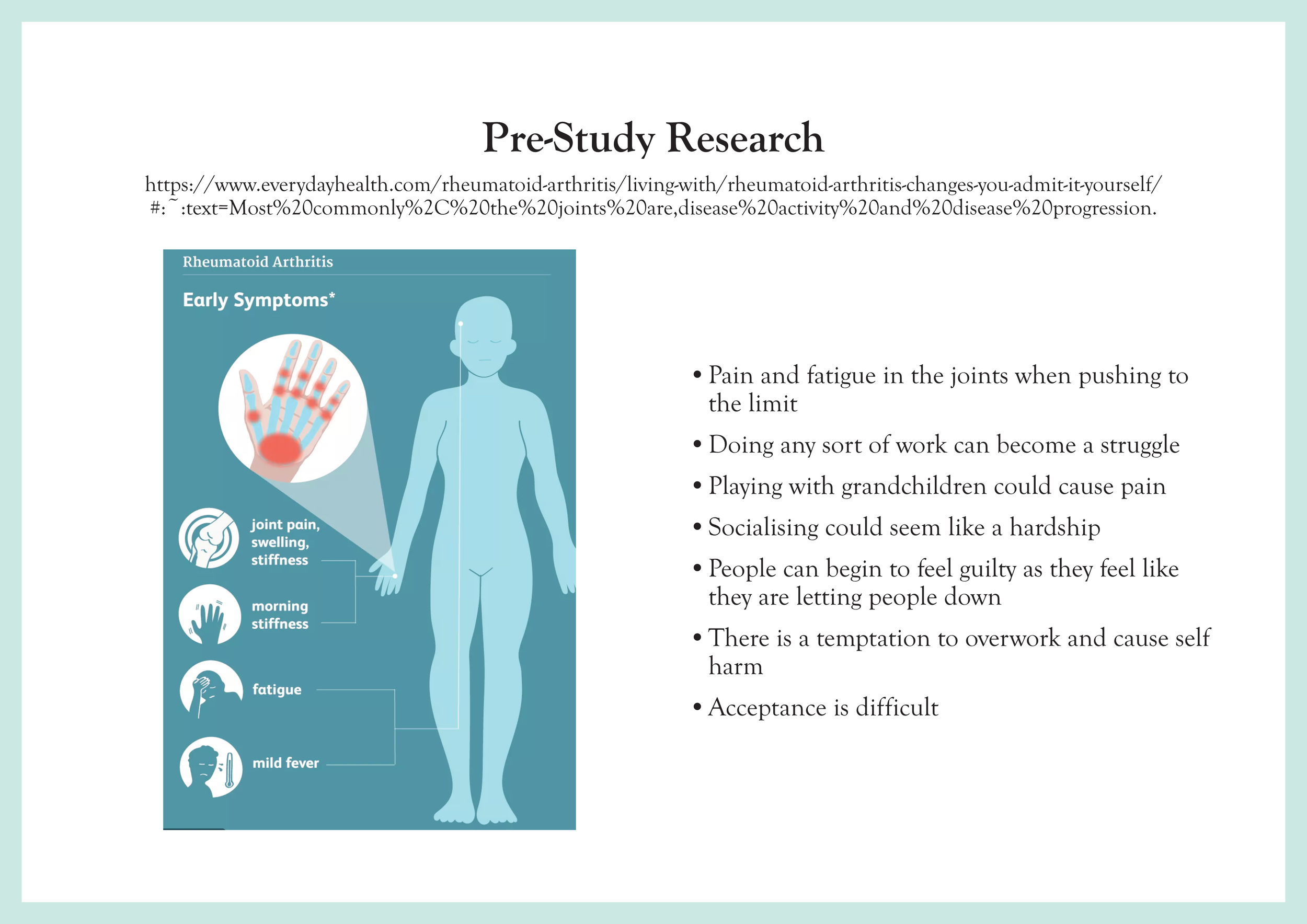
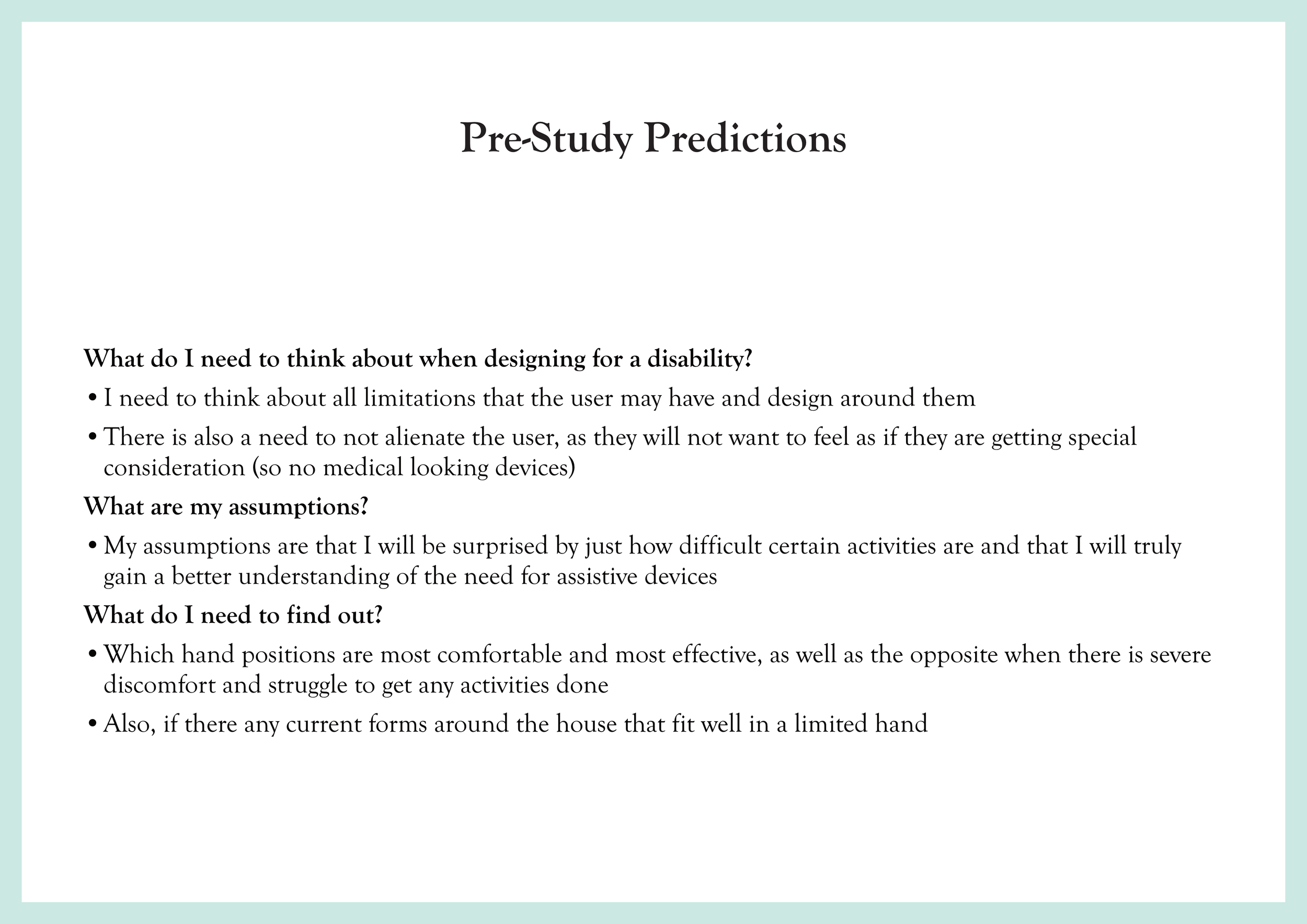
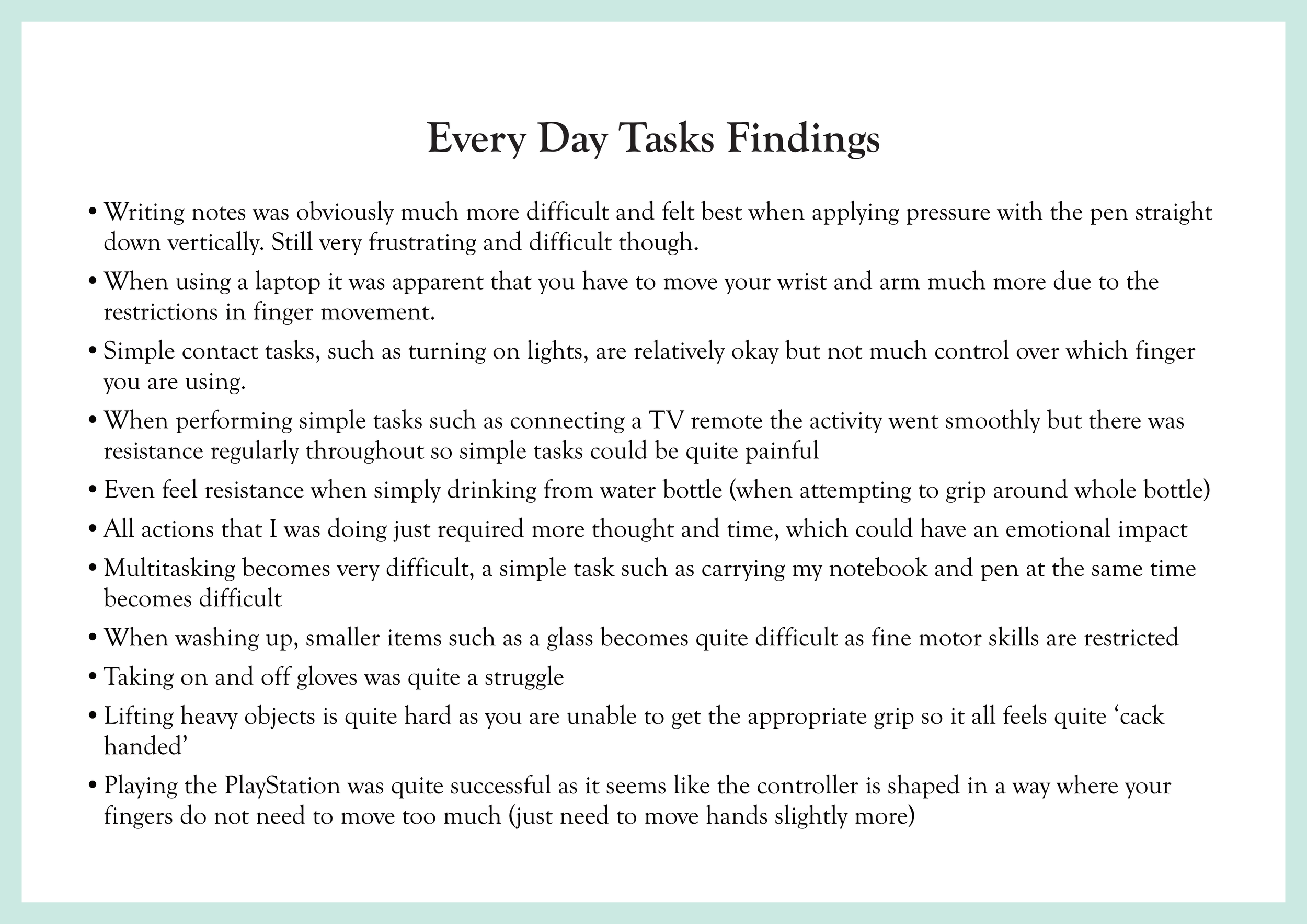
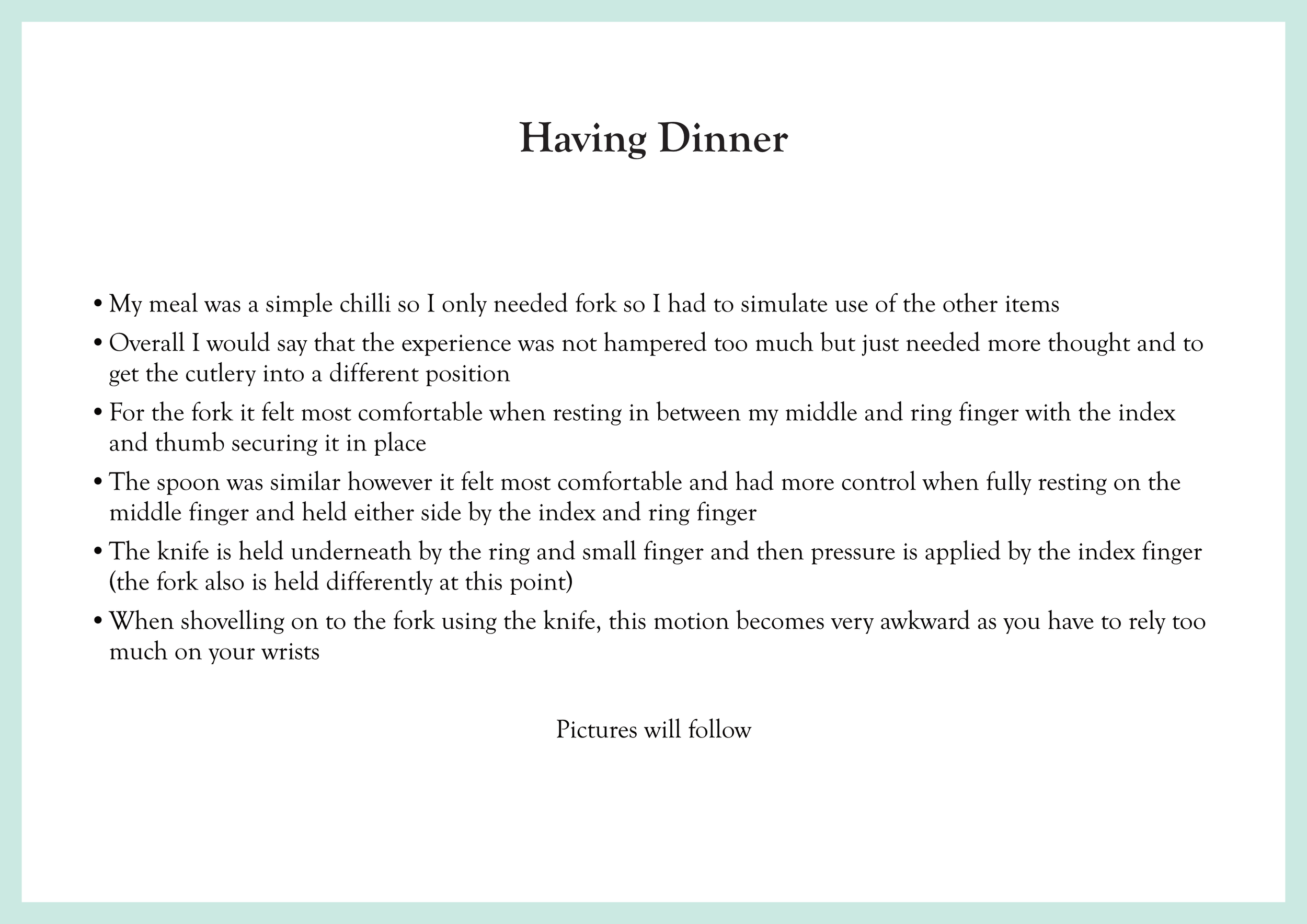
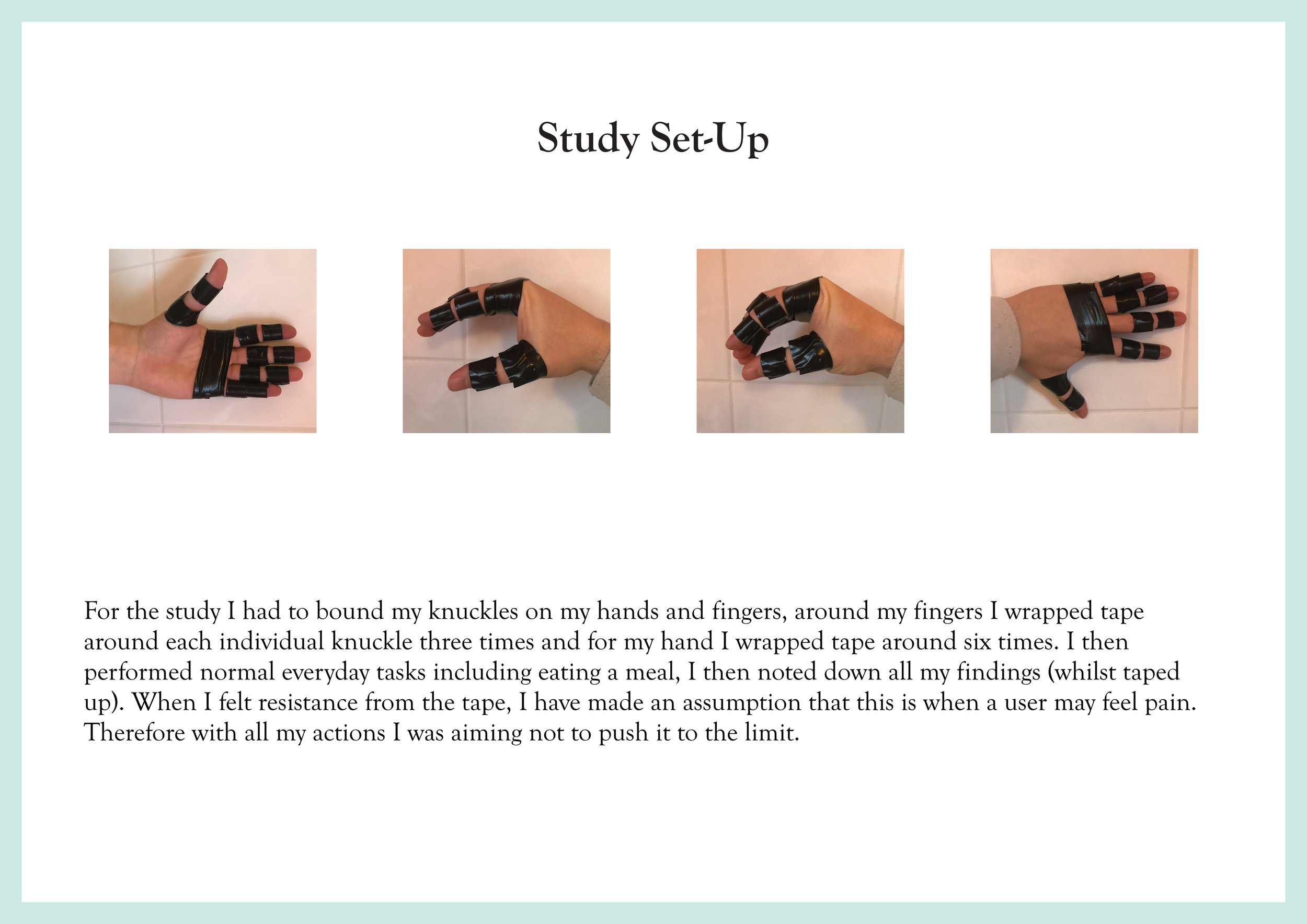
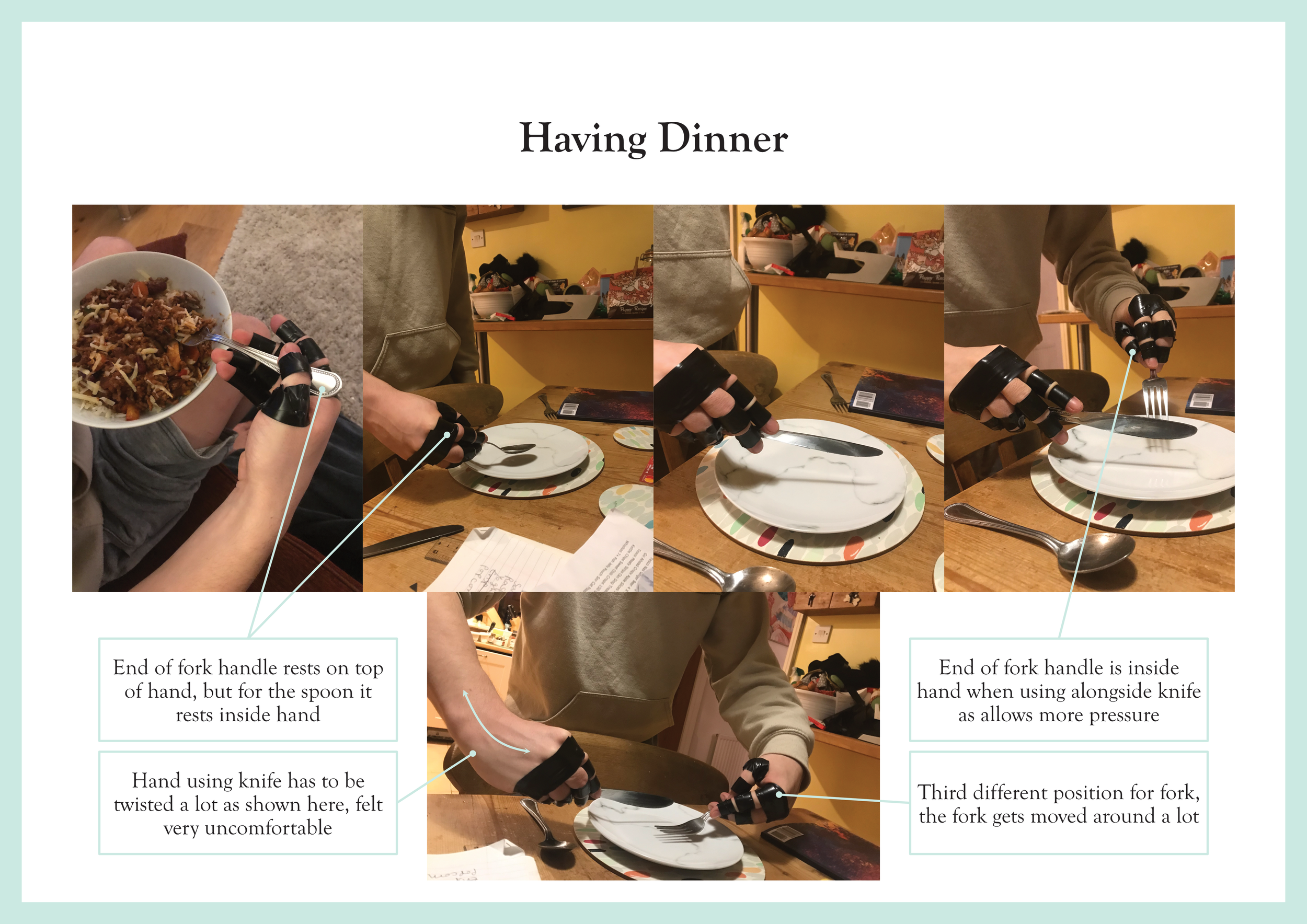
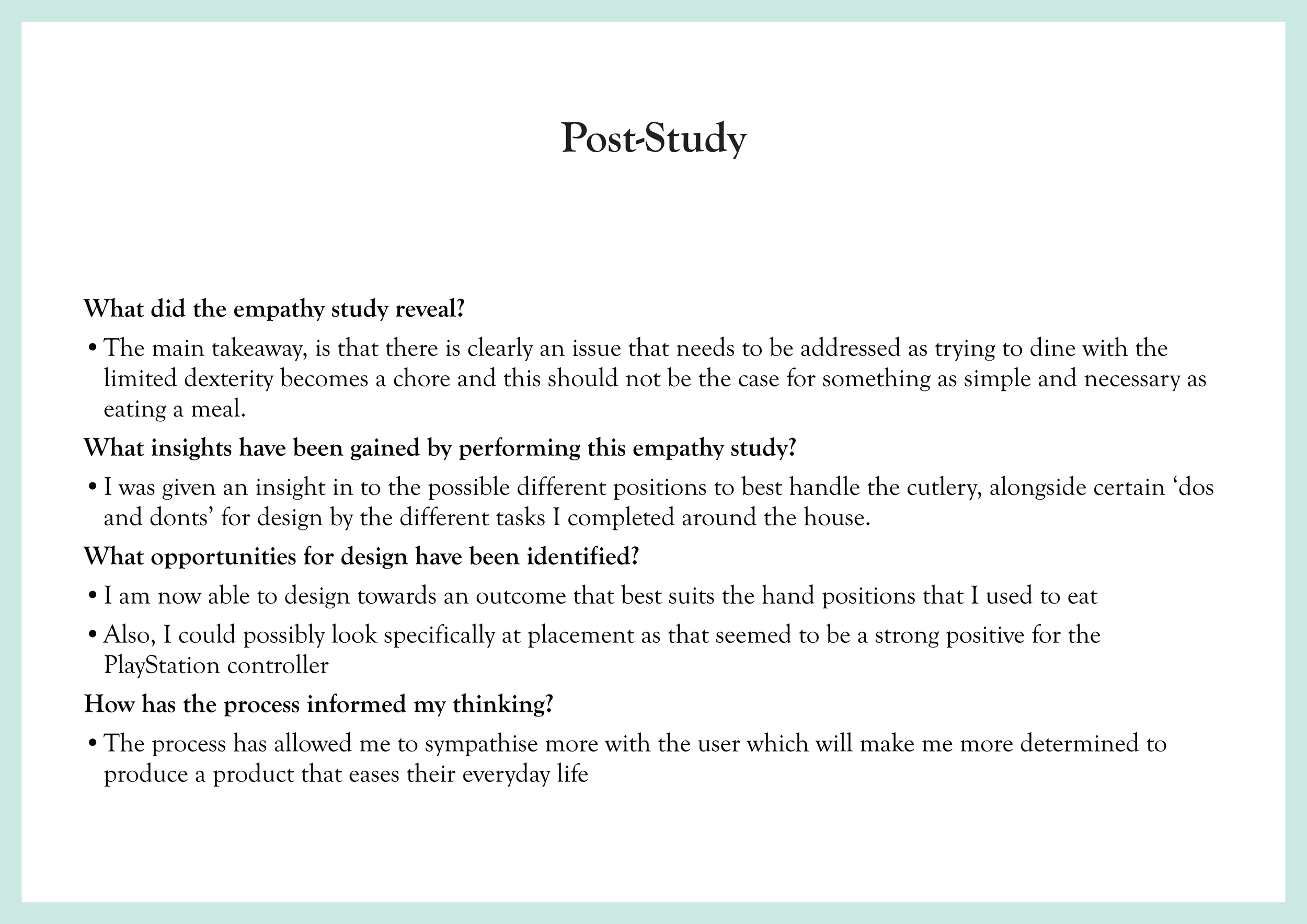
The project seemed best suited to an empathy study in order to become more aware of the issues that reduced dexterity users go through in both every day life and whilst using cutlery. In order to do this, I bound my knuckles on my hands and fingers with tape and I assumed any time I felt ‘resistance’ that would be similar to when a user may feel pain. This study can be seen below…

Concept Proposals
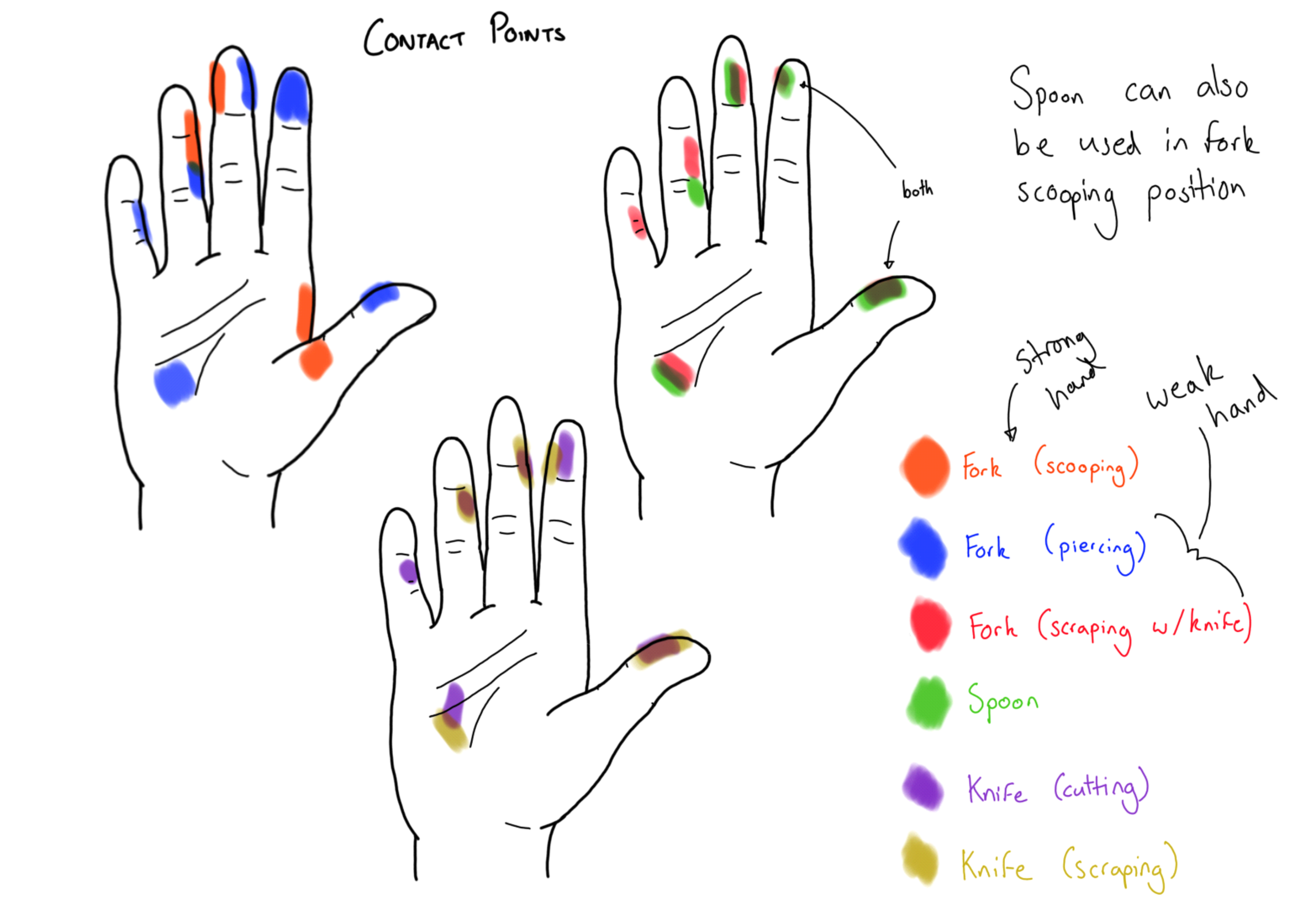
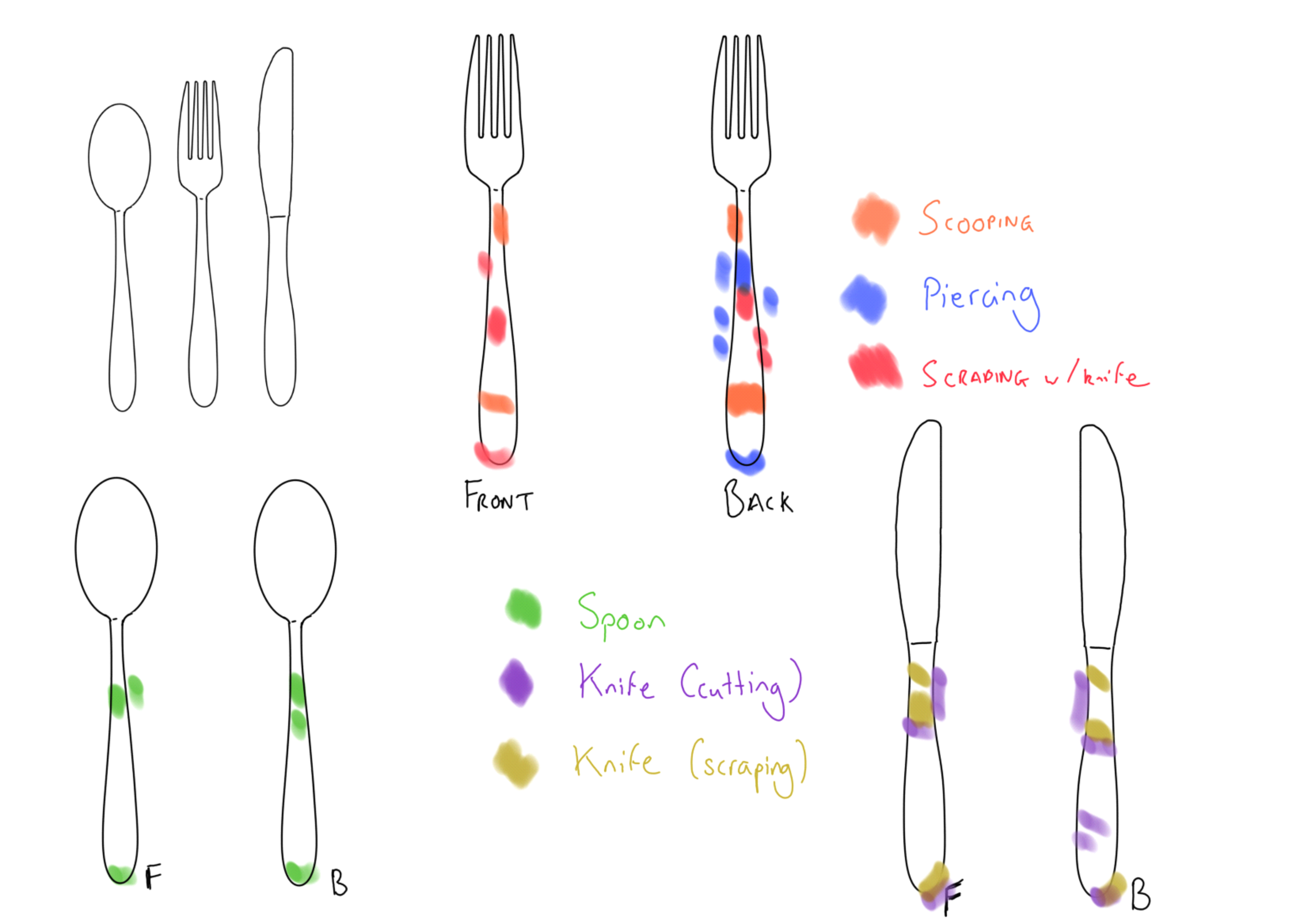
An important finding from my empathy study above was that I worked out all of the various contact points when using the cutlery at reduced dexterity. This was constantly referred back to throughout the design journey and gave a clear direction to my concepts.
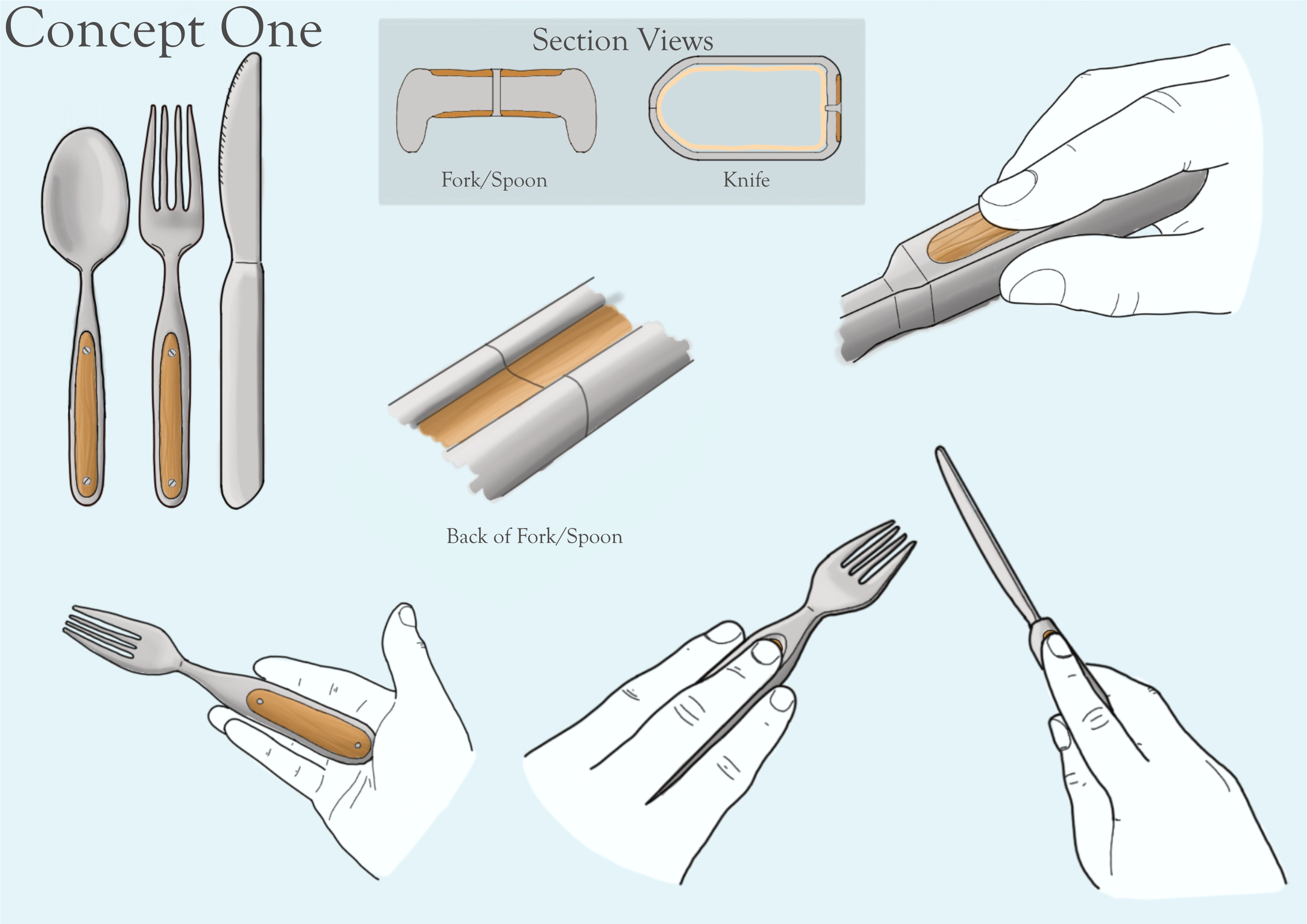
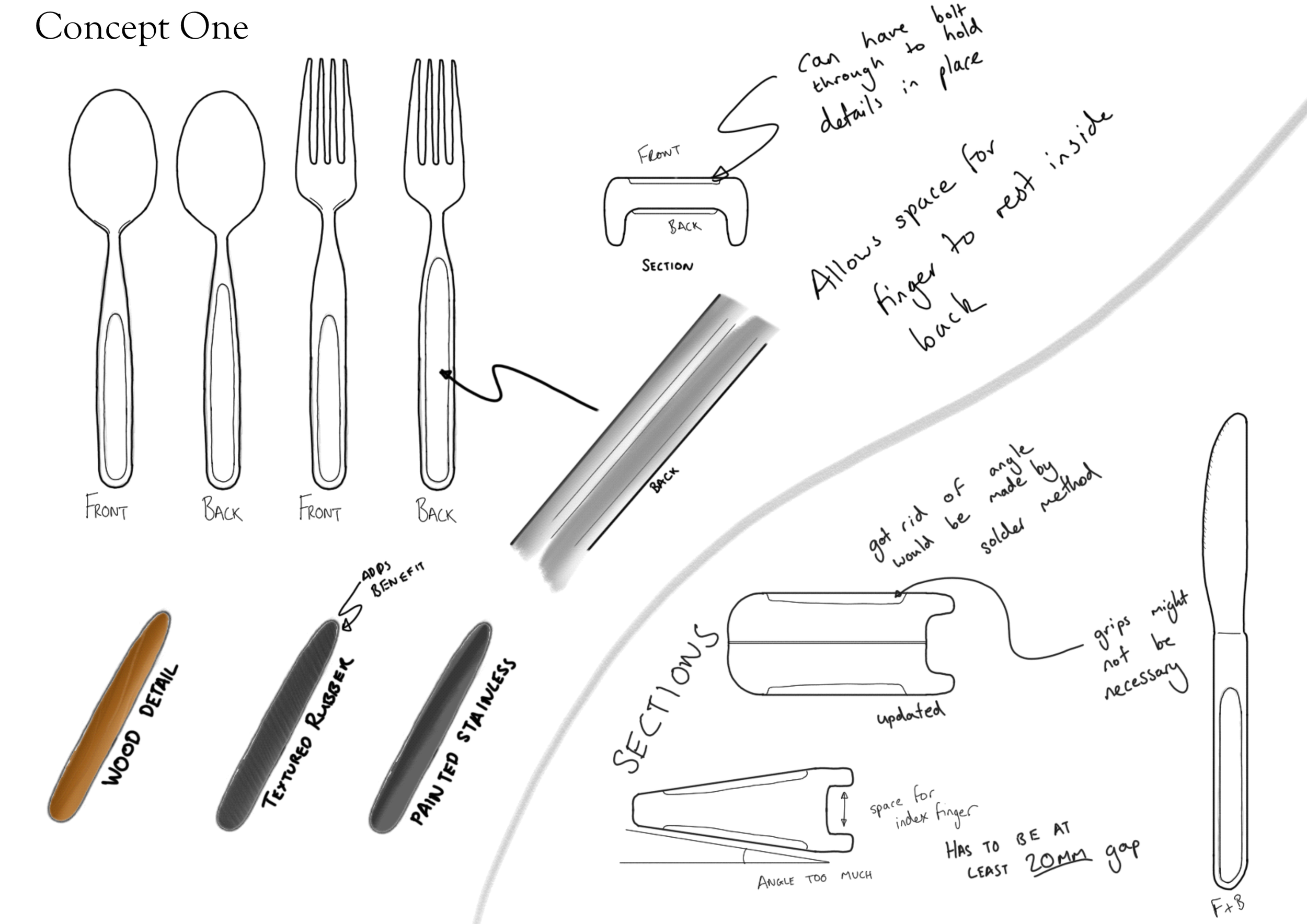
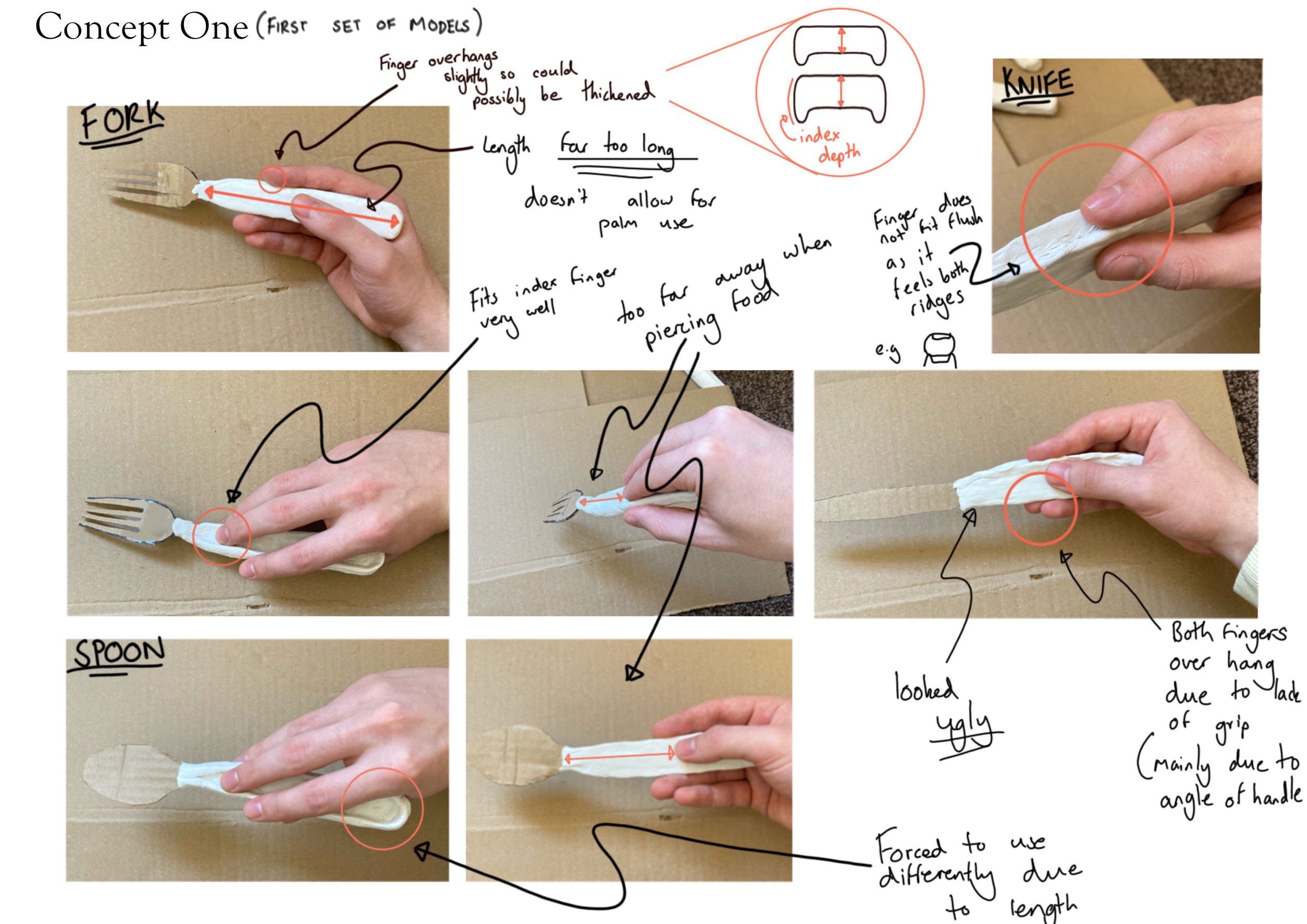
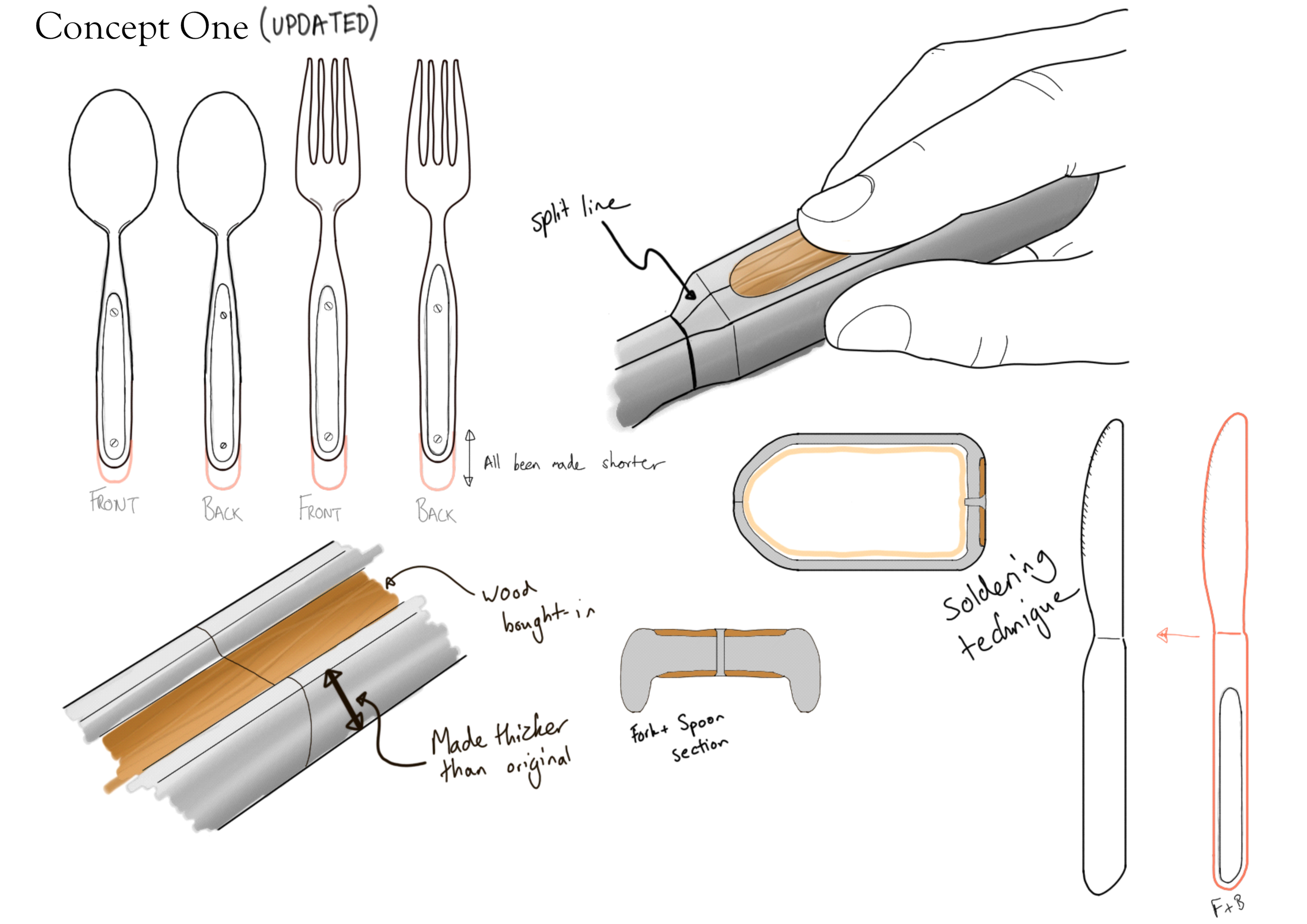
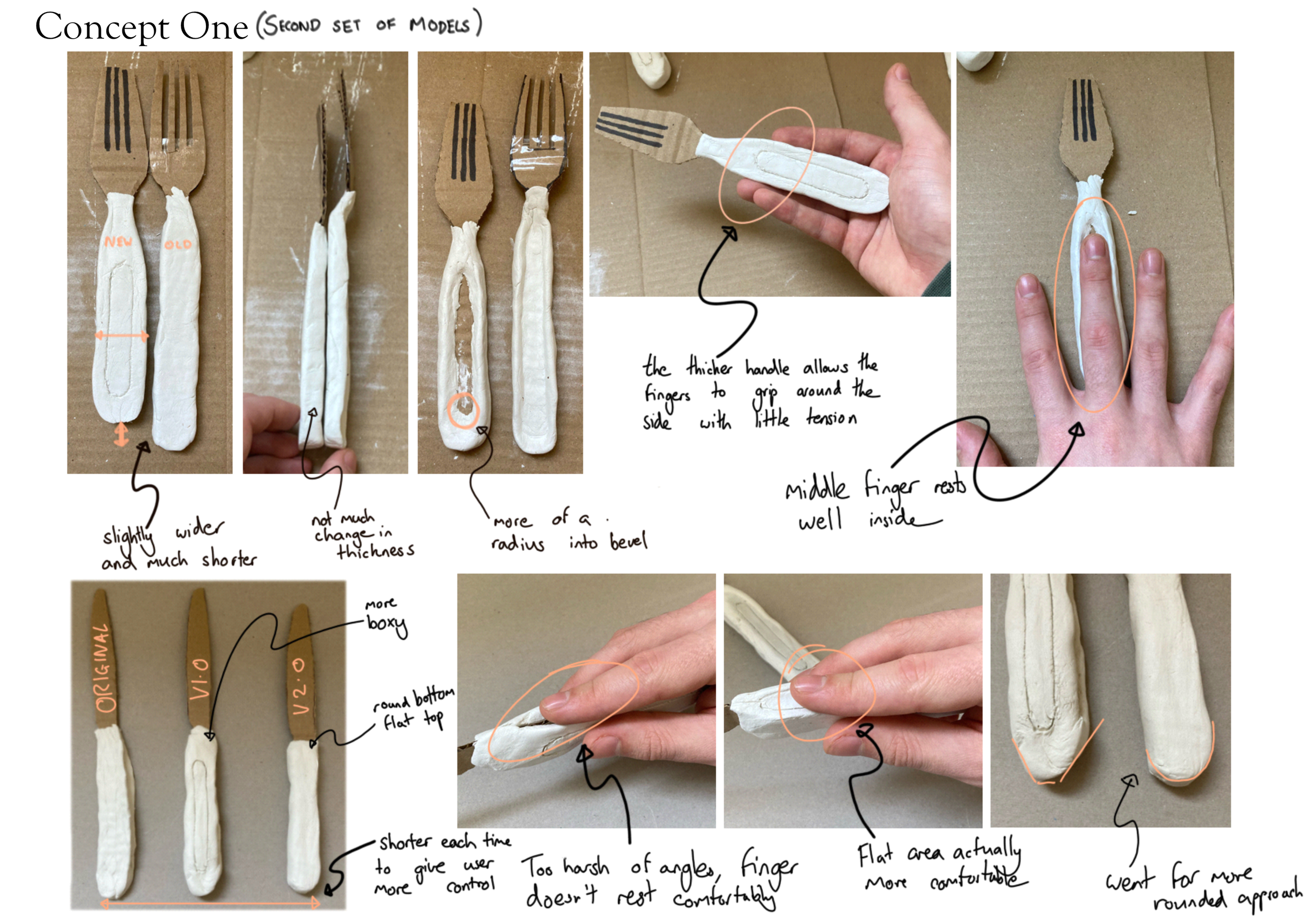
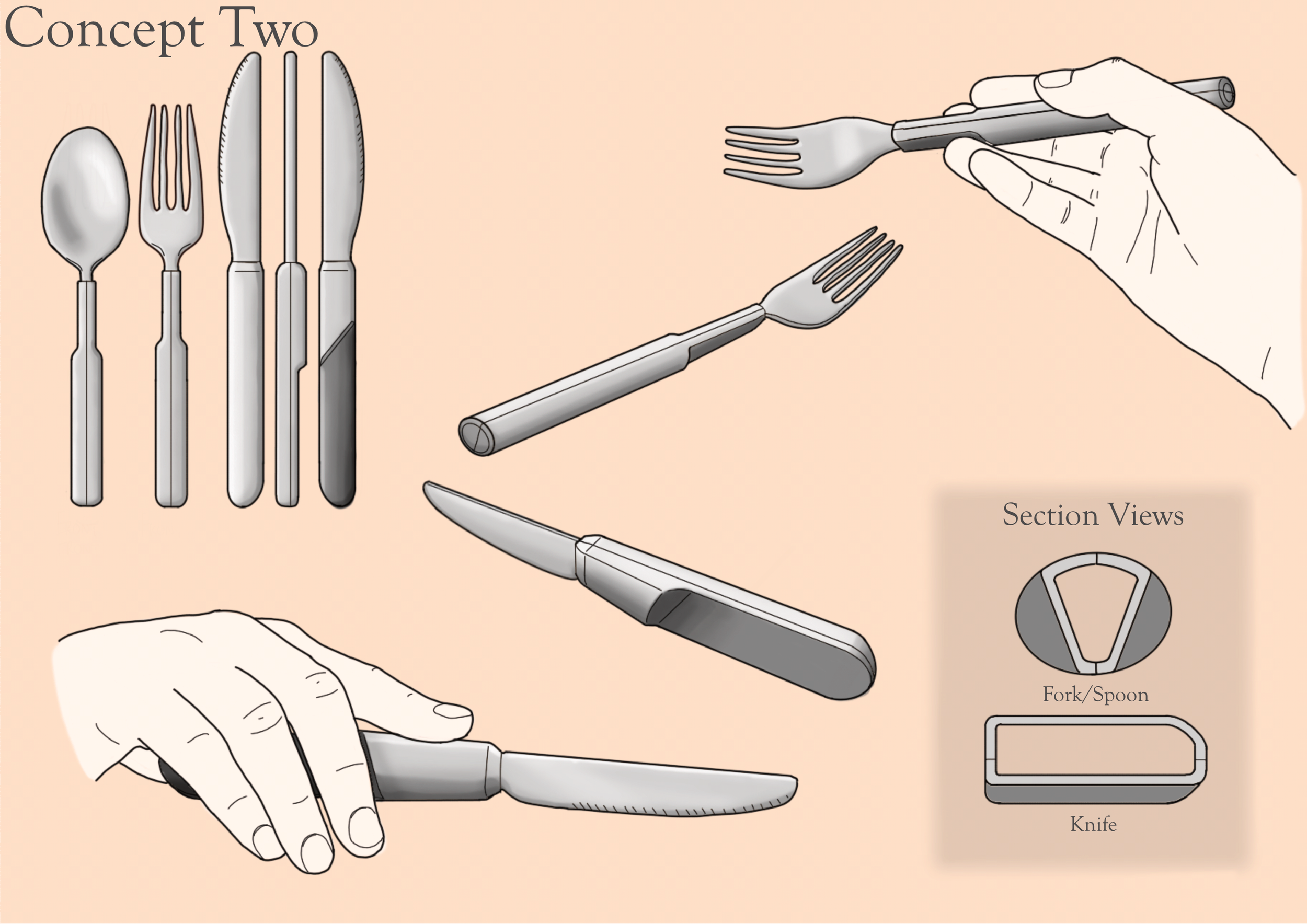
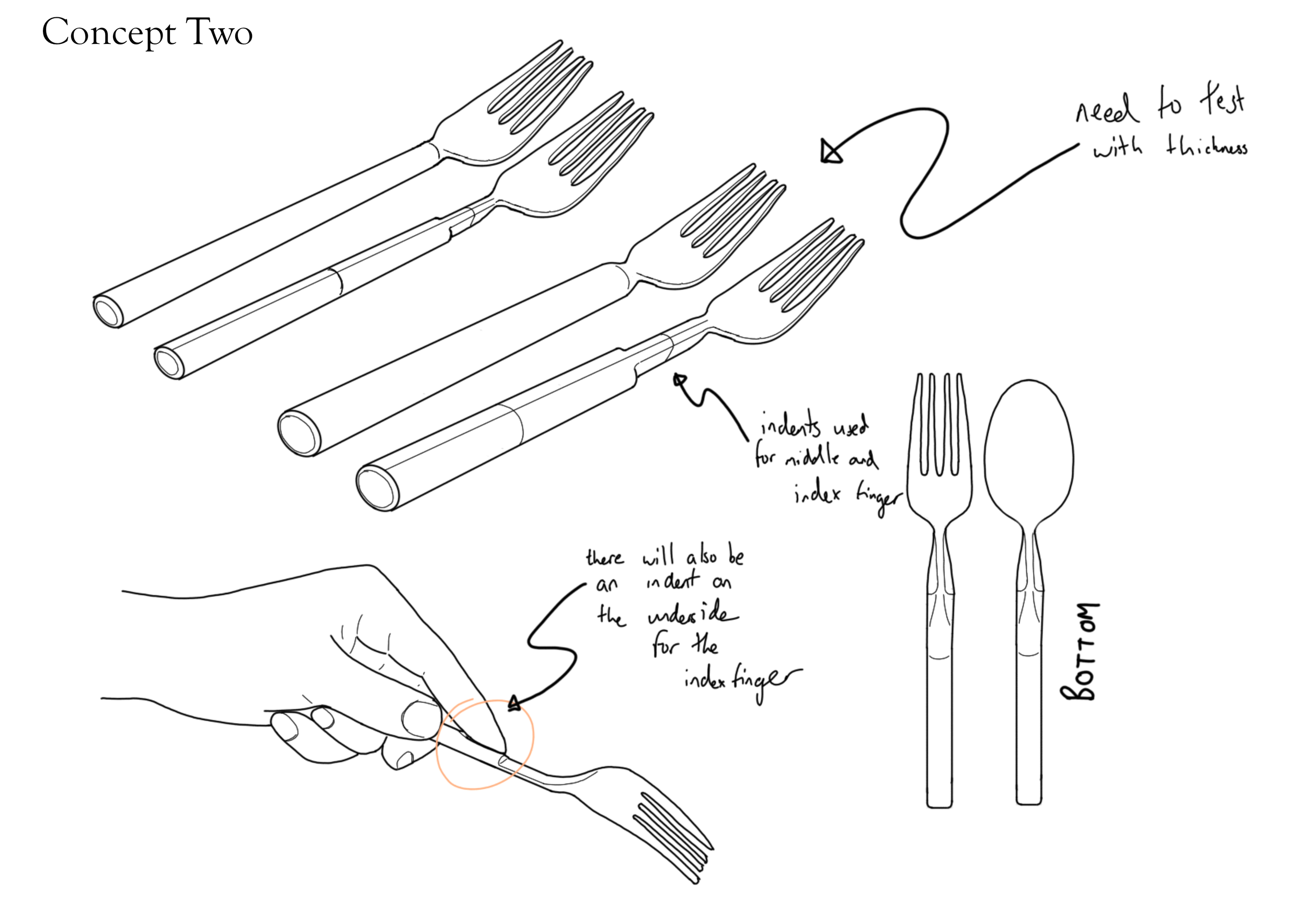
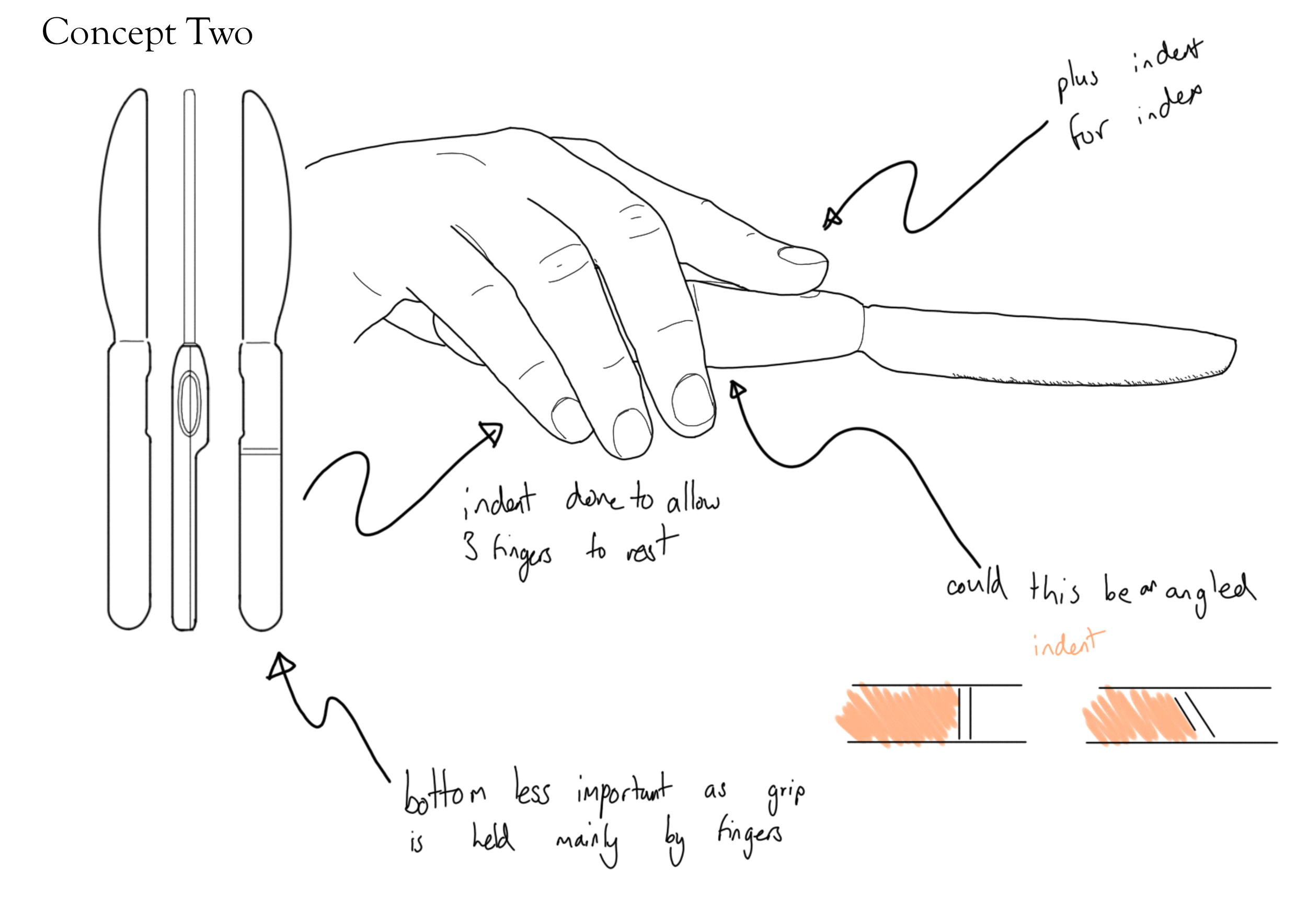
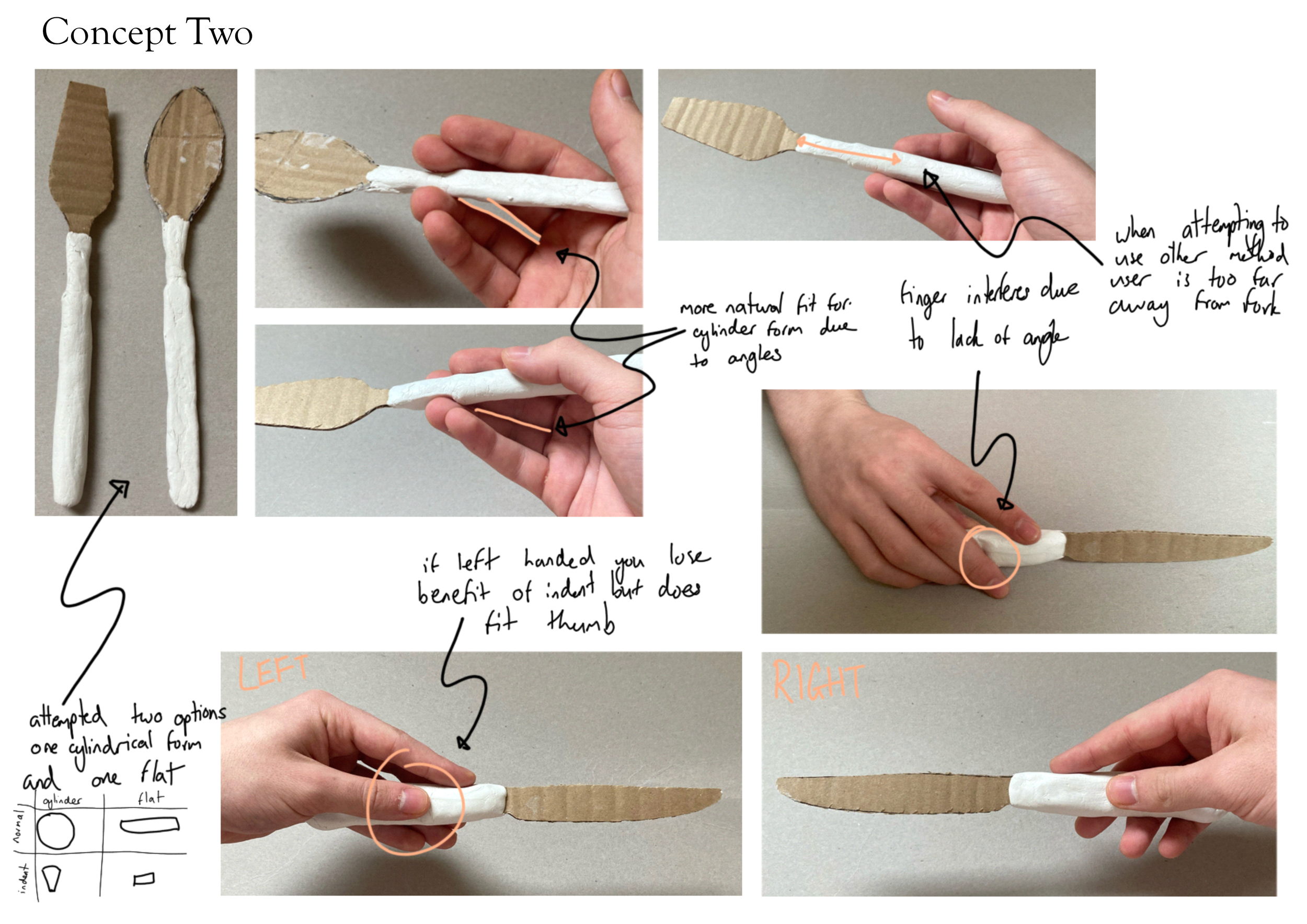
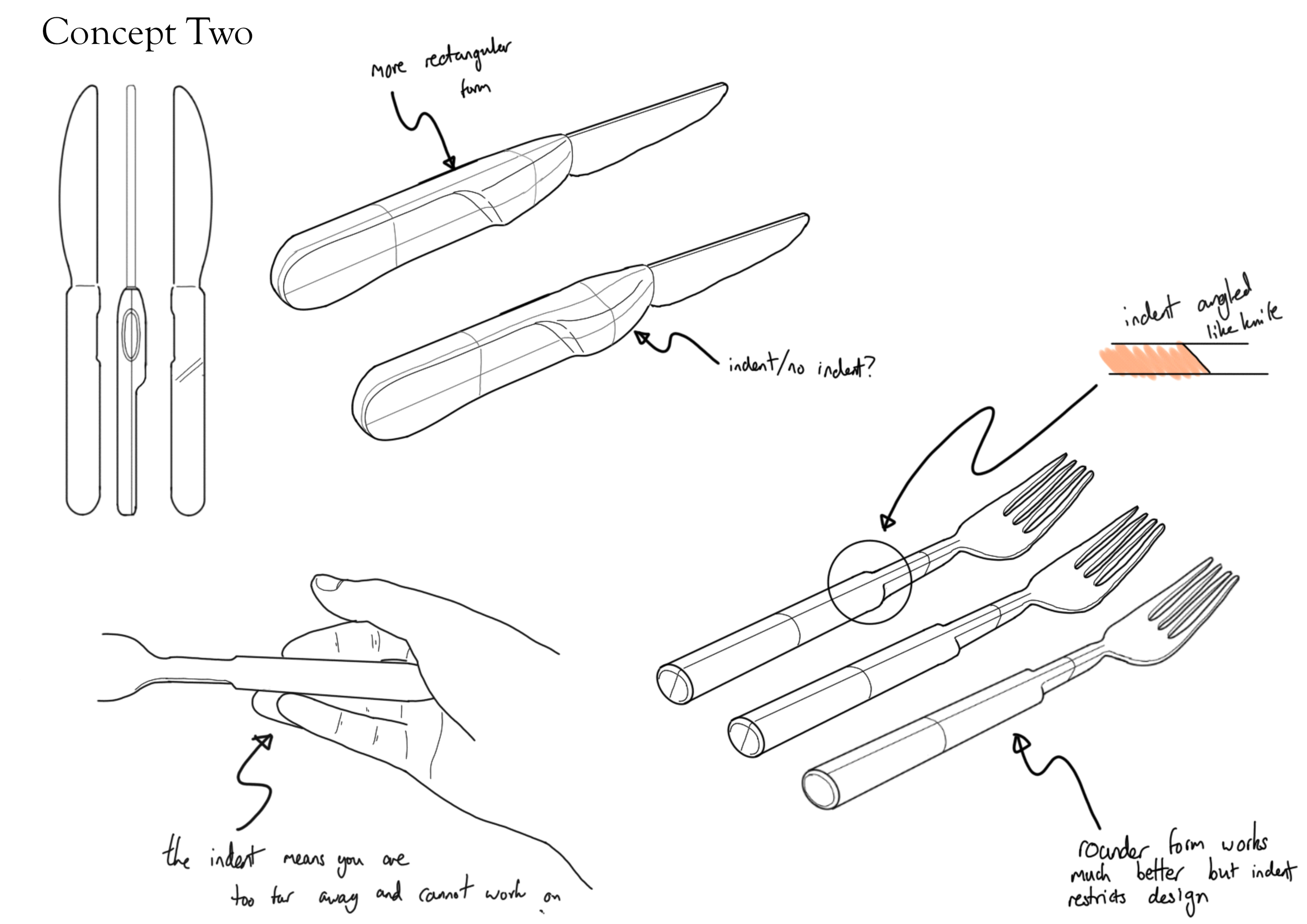
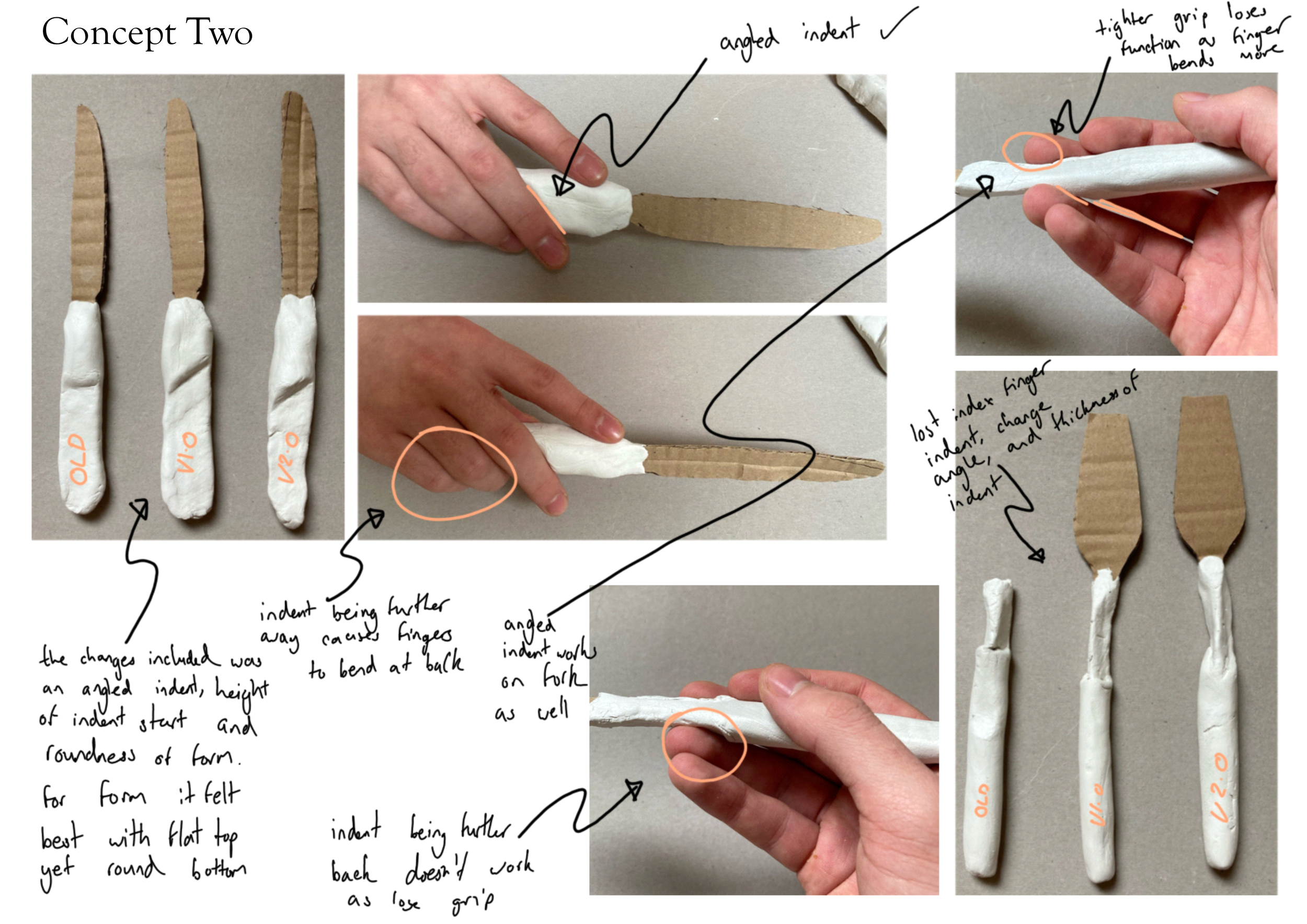
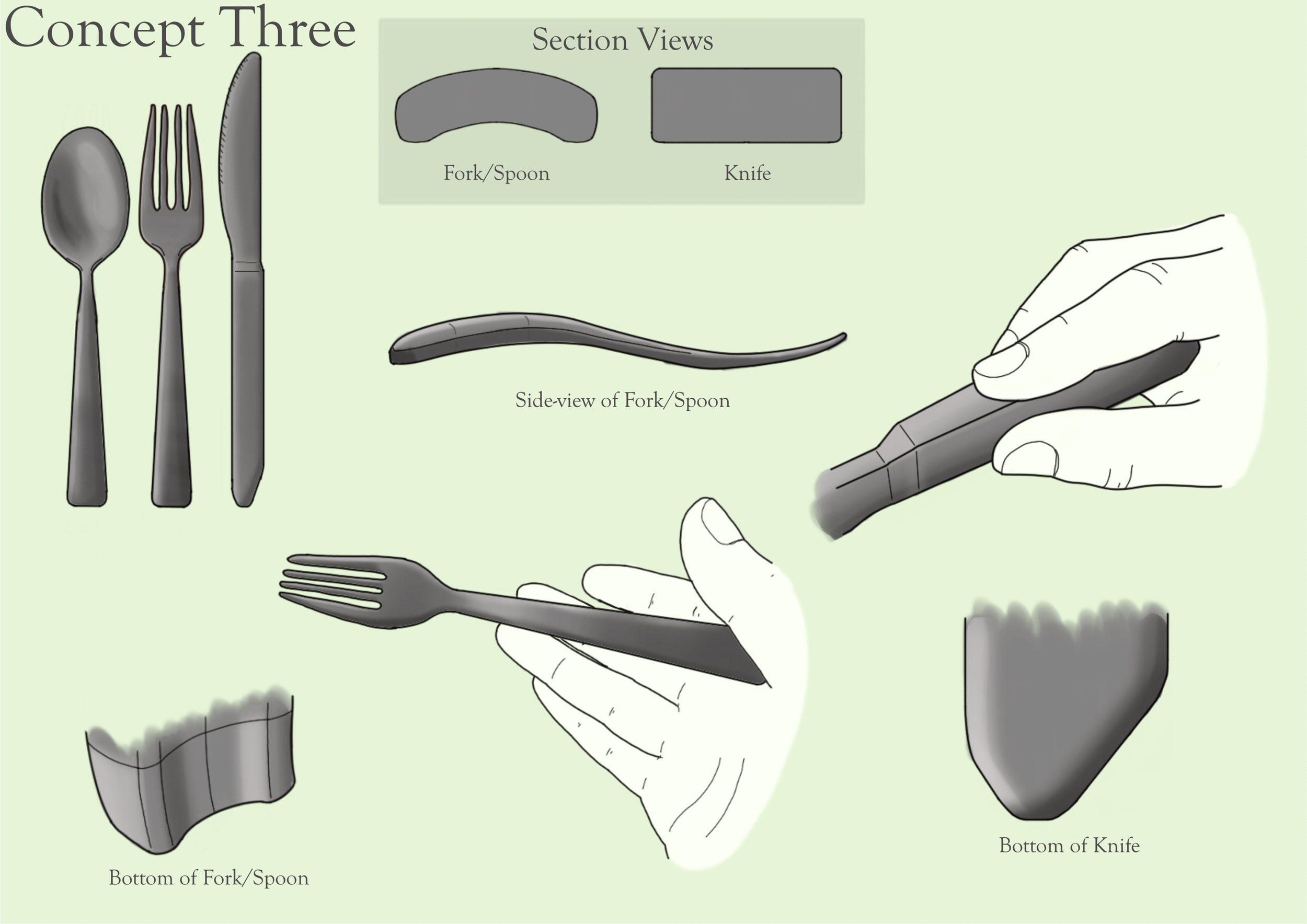
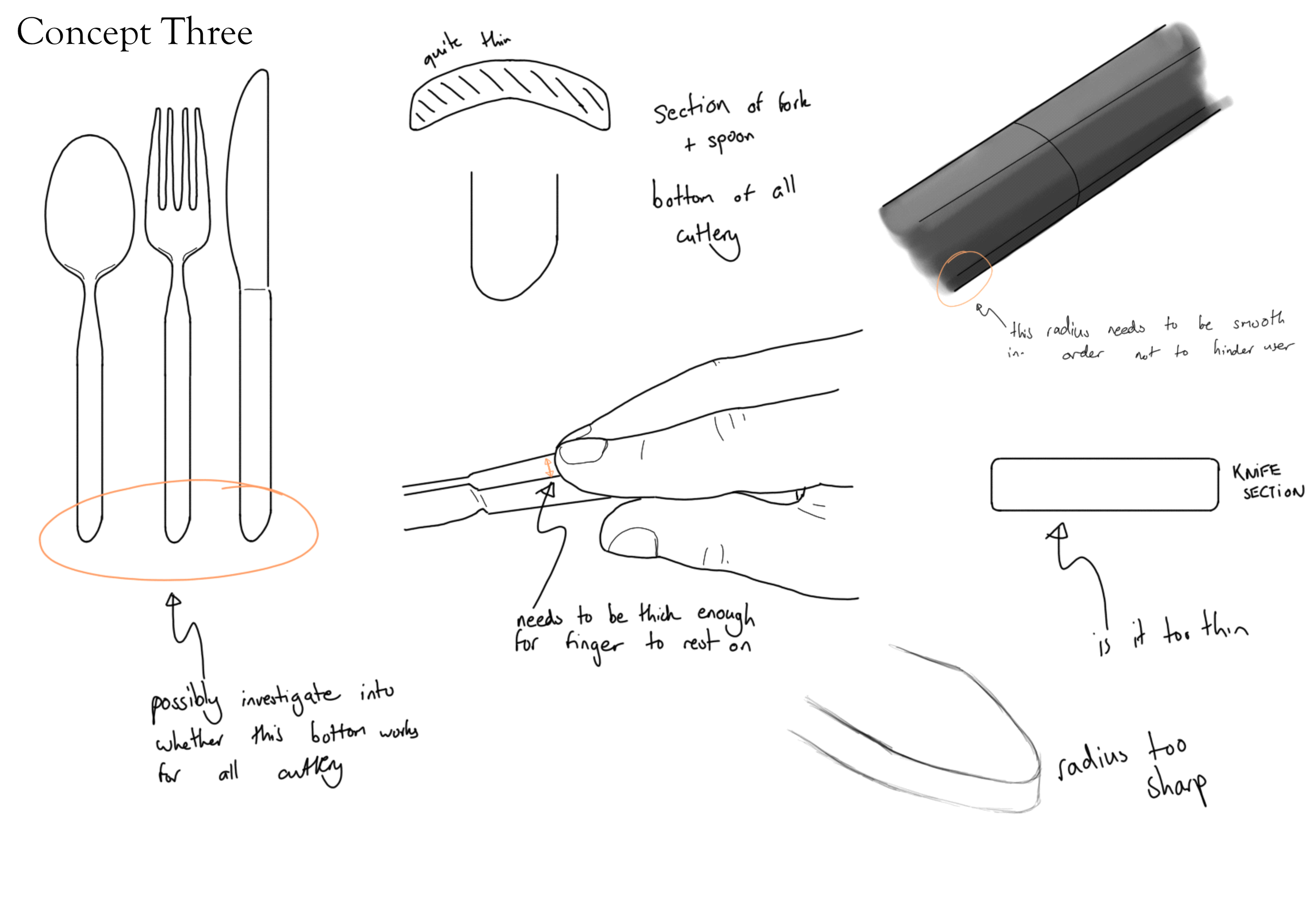
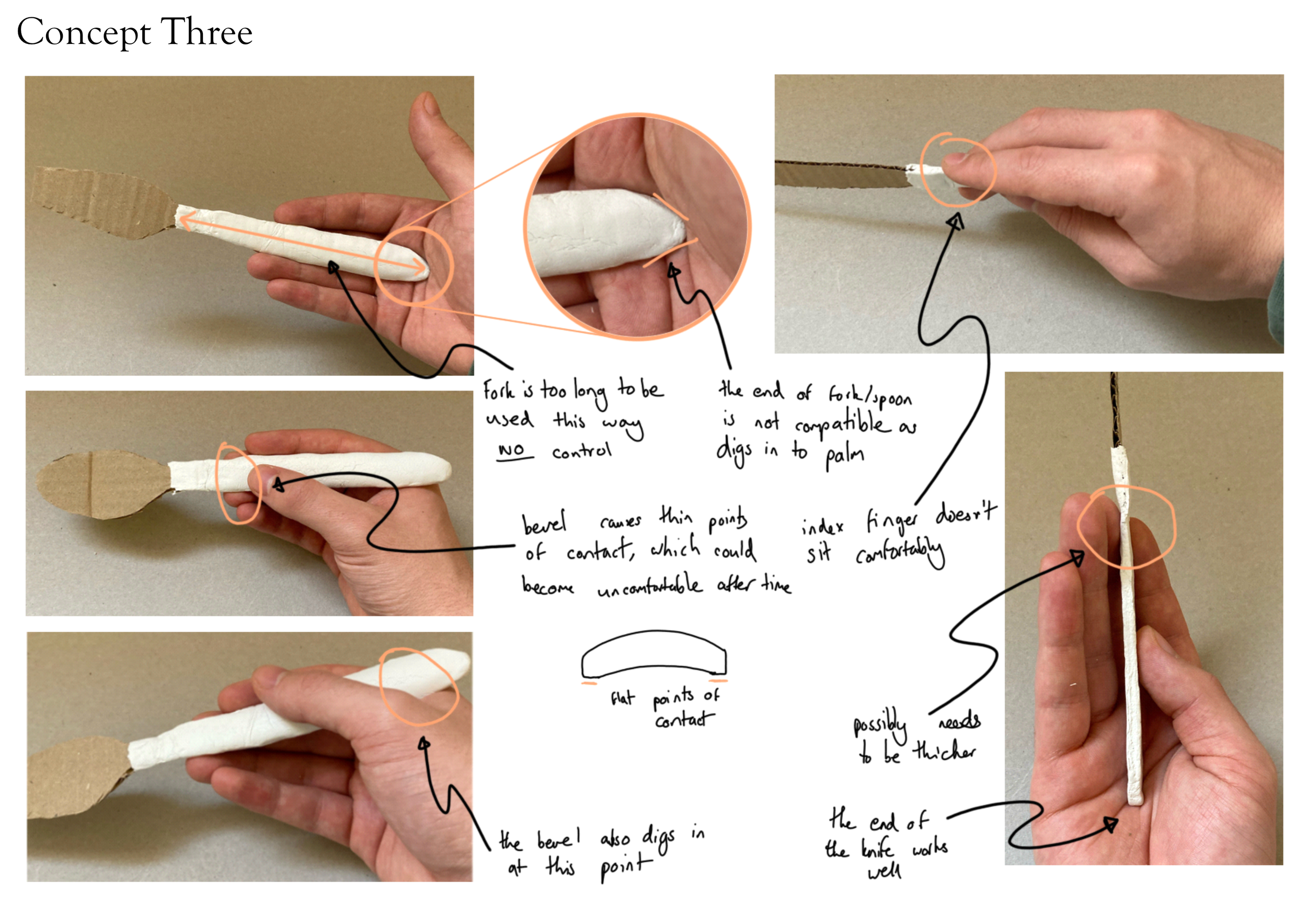
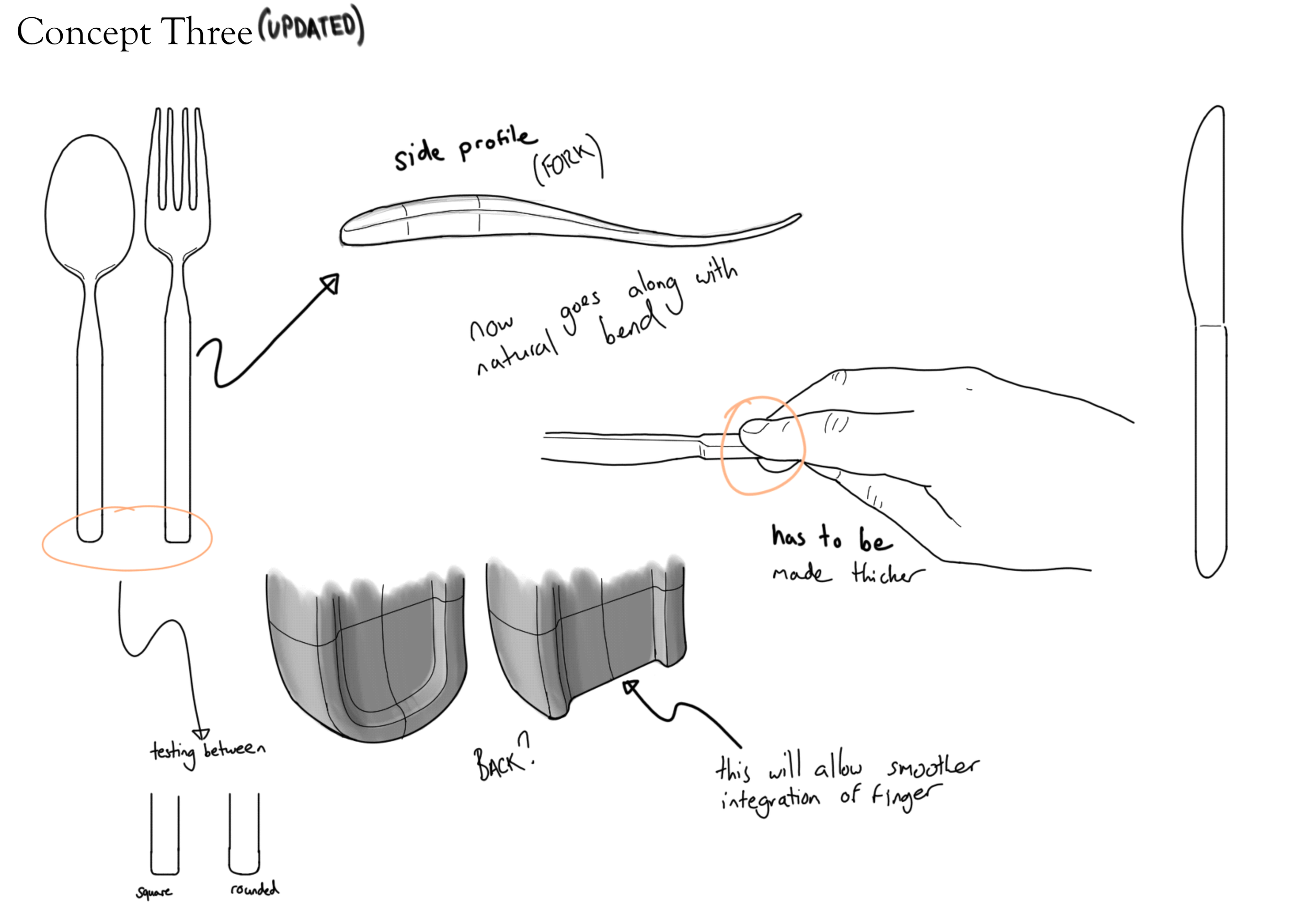
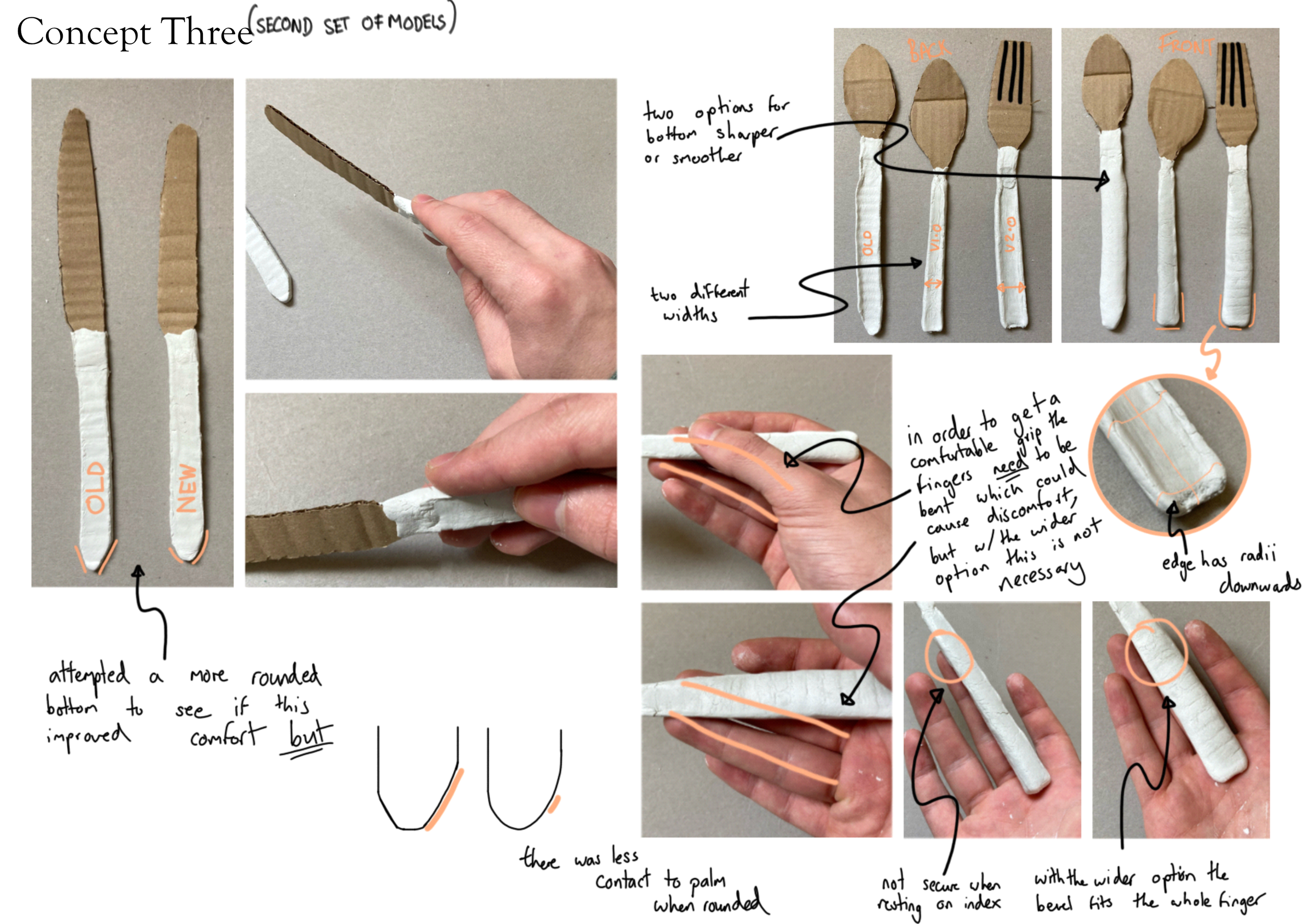
I again created three different concepts for my client all offering different solutions. This concept stage required large amounts of 3D modelling, as designing practically instead of theoretically allowed me to better understand if I was coming up with the correct solutions. The three concepts can be seen under the contact point diagrams…

Final Concept
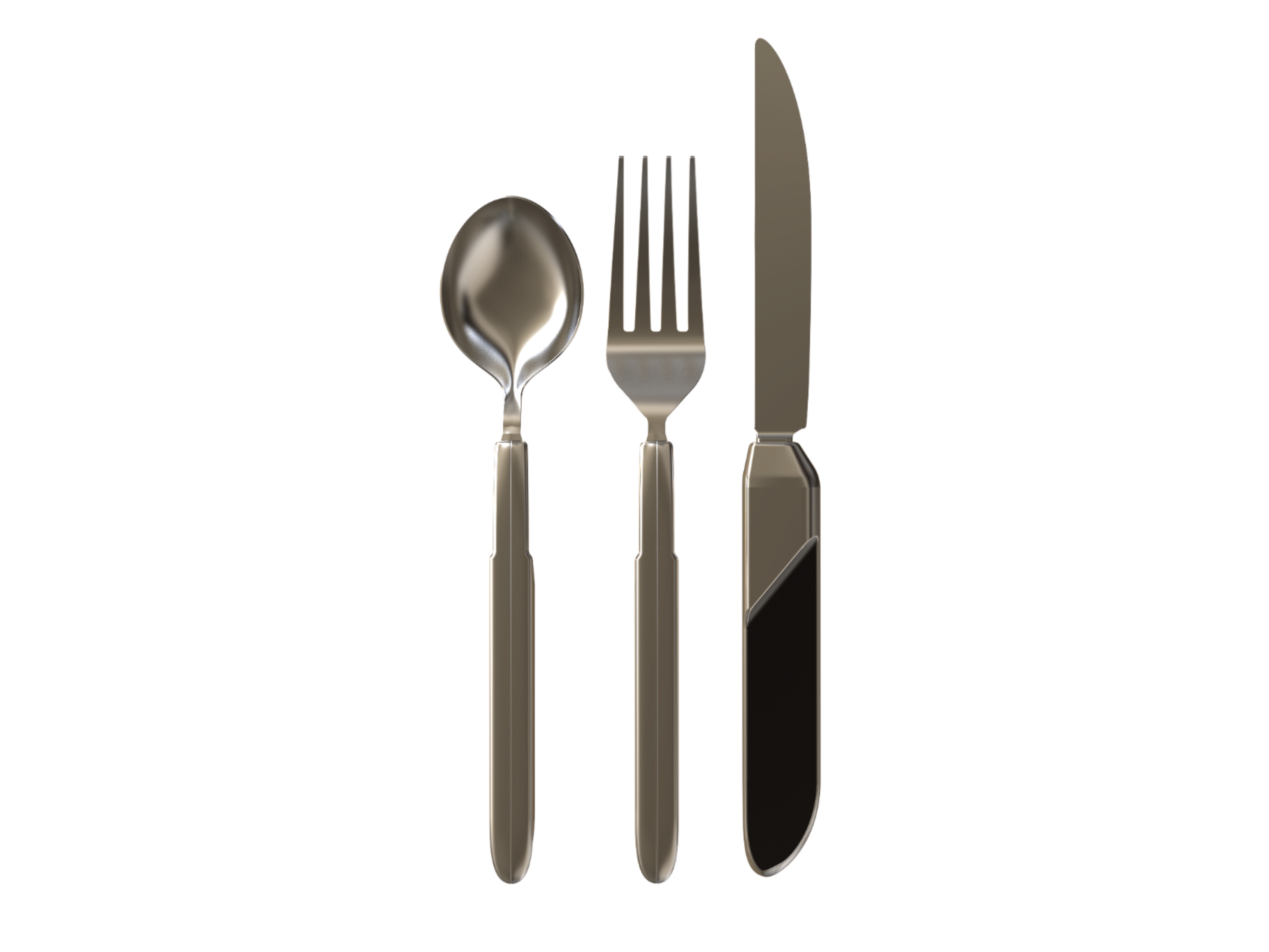
The decision was made to continue with ‘Concept Two’ and the main reason for this was through further user testing it was clearly the most comfortable as it was positively affecting all the previously determined contact points. The main tasks in refinement came down to improving the elegance and ensuring that the set was cohesive. The final set can be seen below…
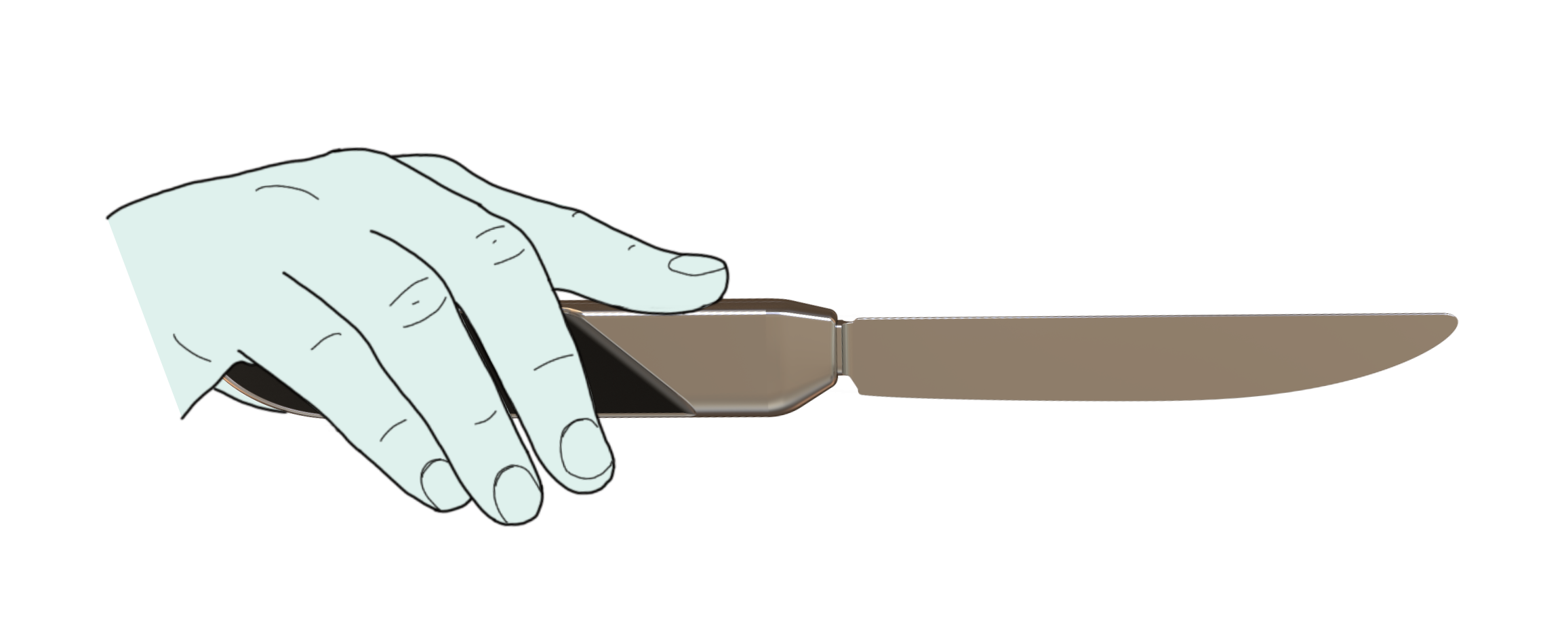
Index finger allowed to rest on large surface area whilst the rest are allowed to sit within indented area

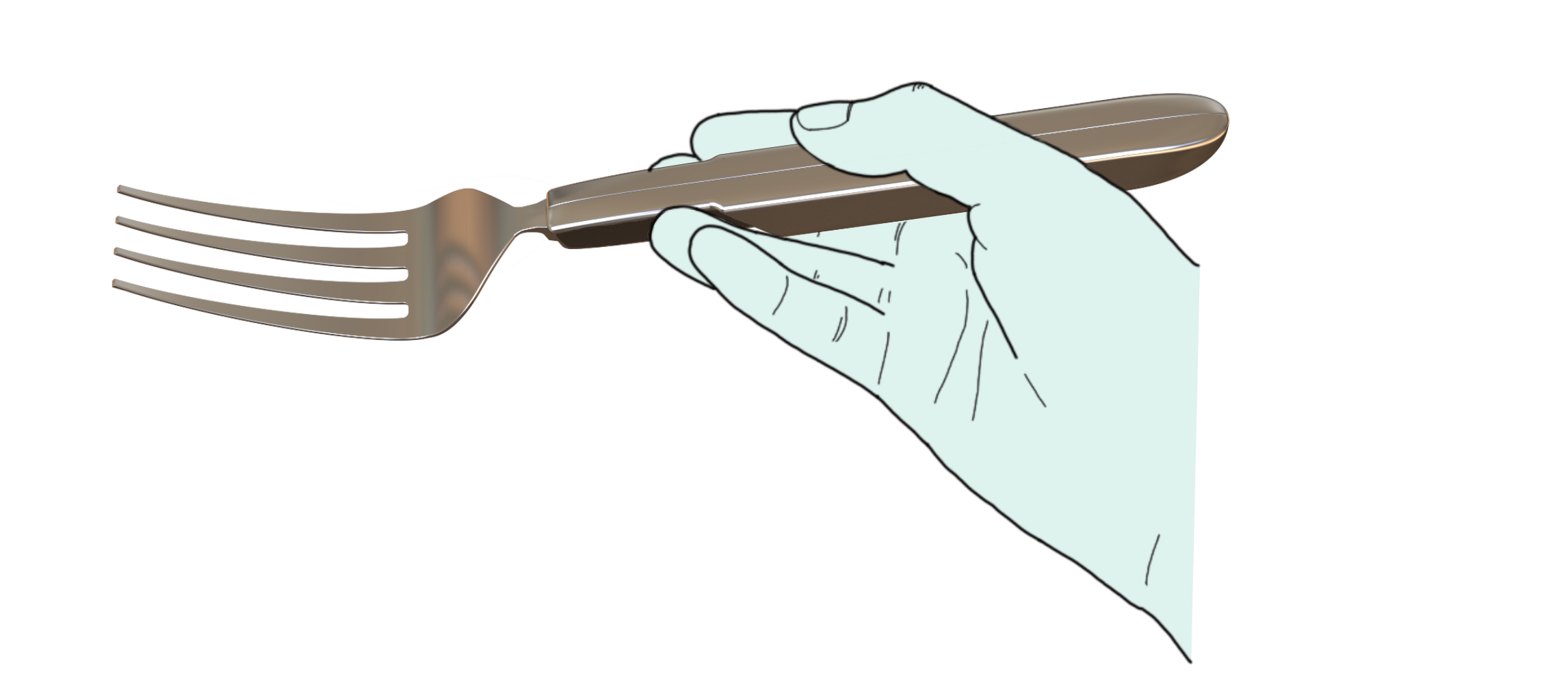
Middle and ring finger are able to support the weight of the fork and allows the wrist to perform most of the movement